Solar Panels
 Solar Controllers
 Batteries
 Inverters
 Mains Chargers
 DC-DC Chargers
 Cables/Accessories
 Power Converters
 Monitoring
 Kits
Kits







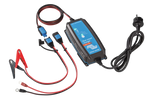
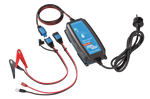
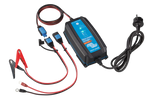
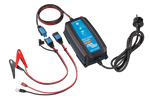


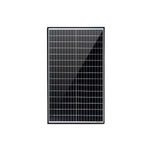
Exotronic 50W Fusion Fixed Solar Panel
Exotronic 50W Fusion Fixed Solar Panel


 Highlights:Junction Box: IP68 rated weather-resistant junction box,Connectors: MC4 compatible connectors for easy installation,Mounting Hole: Pre-drilled mounting hole in frame,Solar Cable: Durable UV-resistant solar cable,Aluminium Frame: Black anodised aluminium alloy frame.
 Black anodised aluminium alloy frame featuring seamless corner construction for enhanced structural durability and aesthetics.
 Key features: High-efficiency TOPCon cells, Up to 20% smaller footprint than standard panels, Compact design optimized for caravans and RVs.


Regular price
$69.00
Availability:
In Stock
 View all products from Exotronic
Guaranteed Safe and Secure Checkout
255
DESCRIPTION
Exotronic 50W Fusion Series: Compact N-Type TOPCon Solar Panel for Off-Grid and Mobile Energy
High-Efficiency 12V Solar Panel — Designed for Caravans, RVs, and Marine Environments
The Exotronic 50W Fusion Series combines advanced N-Type TOPCon solar cell technology with a compact, lightweight design, making it an excellent choice for mobile and off-grid energy needs. With a fixed 25.2% cell efficiency, this panel outperforms many conventional monocrystalline solar panels and PERC modules—delivering reliable output even in limited space.
Engineered for use in 12V solar panel systems, it’s particularly well suited to caravan solar panels, camper trailers, boats, and other mobile setups. Whether you're planning a weekend getaway or installing a permanent caravan solar system, the Fusion Series ensures consistent performance across a range of conditions.
TOPCon: Advanced Solar Technology
TOPCon (Tunnel Oxide Passivated Contact) represents the latest advancement in solar cell technology, delivering higher efficiency, reduced degradation, and improved low-light performance. It marks a clear upgrade over PERC solar panels, which themselves are more efficient than traditional monocrystalline cells. The Fusion Series’ N-Type TOPCon cells ensure consistent, durable energy output, ideal for varied weather and shading conditions typical of mobile and off-grid environments.
Why Choose N-Type TOPCon?
At the heart of this panel is a next-generation Tunnel Oxide Passivated Contact (TOPCon) structure, built on an N-Type base. This delivers superior stability, lower degradation over time, and better low-light performance compared to older P-Type and traditional monocrystalline solar panels—benefits that are especially valuable in Australia’s varied climates.
Combined with a 9-wire busbar design that reduces resistive losses and prevents hot spots, the result is a high-performance solar panel that keeps delivering, year after year.
- 25.2% cell efficiency for maximum energy density in a compact footprint
- N-Type cells for lower degradation and longer lifespan
- Excellent low-light response — ideal for cloudy days and shaded environments
- 9-busbar layout improves reliability and current flow across the cell surface
- Lightweight design — easier to install and handle, especially on vehicles and tight spaces
Durability You Can Depend On
The Fusion Series features a robust yet lightweight construction, making it ideal for use in caravans, RVs, and marine vessels. Designed to withstand Australian conditions, its 25 mm anodised aluminium frame ensures structural integrity without excess weight. The high-transmissivity, low-iron tempered glass enhances light capture and impact resistance.
- Salt mist and ammonia resistant – ideal for marine solar panels and coastal environments
- Rated for wind loads up to 2400 Pa and snow loads up to 5400 Pa
- Supplied with an 800 mm fly lead for quick, flexible installation
- Fully potted junction box prevents moisture ingress, ensuring reliable electrical connections and enhanced longevity even in harsh coastal and marine environments.
Versatile Applications — From Caravans to DIY Projects
Whether you’re upgrading an existing caravan solar panel setup, powering a remote shed, or exploring a DIY energy project, the Exotronic 50W Fusion Series offers a reliable and efficient solution. It’s especially well suited to:
- Charging 12V batteries in caravans, RVs, and boats
- Series wiring for 24V or 48V battery banks in off-grid setups
- Industrial off-grid projects where efficiency and weight are critical
- Remote off-grid installations like sheds, tiny homes, or remote workstations
- Supporting small-scale power systems for lighting, security cameras, and sensors
- Use in education, prototyping, or portable solar kits
With its compact footprint, durable construction, and proven efficiency, the Exotronic 50W Fusion Series is a compelling option among today's best solar panels for mobile and off-grid use. Whether you want solar panels for your next adventure or purchase solar panels for a fixed installation, this model delivers impressive performance in a smaller package—ideal for those seeking top rated solar panels without unnecessary bulk.
Ready to Go Off-Grid?
Order the Exotronic 50W Fusion Series today and experience high-efficiency solar technology that’s built for Australian conditions. Whether you're outfitting your caravan, boat, or tiny home, this panel delivers dependable power—wherever the road takes you.
SKU: Exo-SP-TCN-050
SPECIFICATIONS
Specifications
Electrical Characteristics | |||||||||
| Model | Power (W) | Dimensions (mm) | Weight (kg) | Vmp (V) | Imp (A) | Voc (V) | Isc (A) | ||
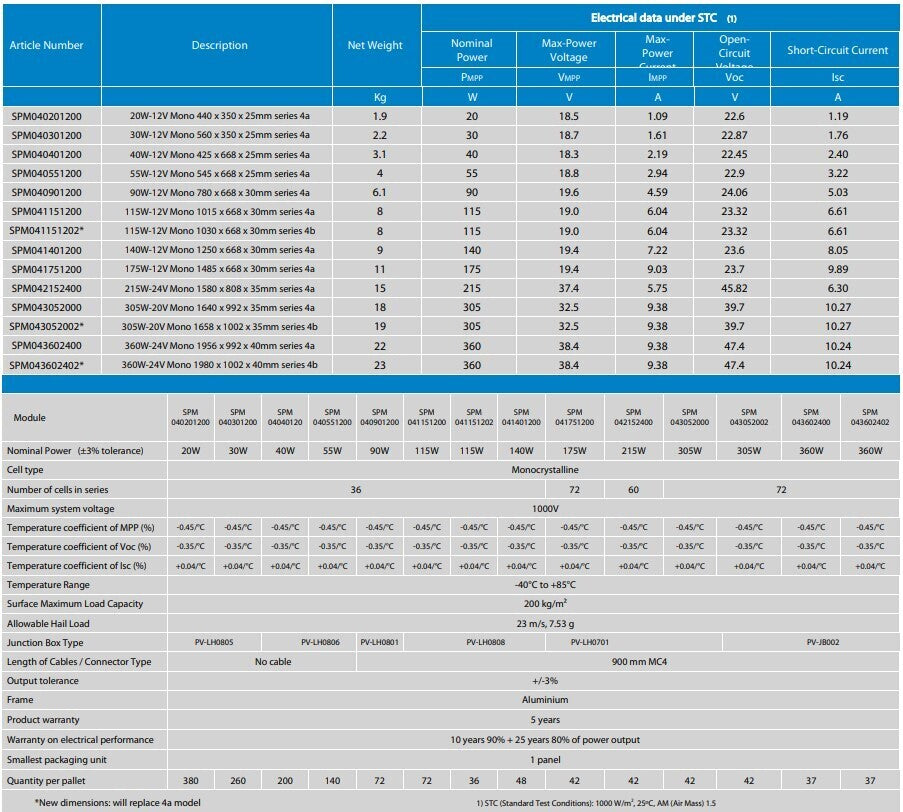
| Exo-SP-TCN-050 | 50 | 650x395x25 | 2.55 | 17.7 | 2.94 | 20.7 | 3.2 | ||
Temperature Ratings | |
| NMOT | 41C +/-3C |
| Temperature Coefficient of Pmax | -0.37%/C |
| Temperature Coefficient of Voc | -0.29%/C |
| Temperature Coefficient of Isc | 0.05%/C |
Maximum Ratings | |
| Operating Temperature | -40 - +85C |
| Maximum System Voltage | 1000VDC |
| Maximum Fuse Rated Current | 15A |
Mechanical Characteristics | |
| Front | 3.2mm Tempered Glass |
| Frame | Black Anodized Aluminium Alloy |
| Junction Box | IP68 |
| Connectors | MC4 Compatible |
| SKU: | Exo-SP-TCN-050 |
| Model #: | Exo-SP-TCN-050 |
| MPN: | Exo-SP-TCN-050 |
| HS code: | 8541430010 |
| Country of origin: | CN |
| Package weight: | 2.55 kg |
| Package length: | 0.65 m |
| Package width: | 0.4 m |
| Package height: | 0.03 m |
WARRANTY
Exotronic Warranty Policy
This warranty policy applies to Exotronic products sold in Australia through authorised dealers and resellers. It applies to the original end-user purchaser of the product, as evidenced by the authorised dealer’s invoice, and is not transferable without Exotronic’s consent. Exotronic warrants that its products are free from defects in materials and workmanship under normal use and service, subject to the terms and conditions below. The benefits given by this warranty are in addition to other rights and remedies under law. Our goods come with guarantees that cannot be excluded under the Australian Consumer Law. You are entitled to a replacement or refund for a major failure and compensation for any other reasonably foreseeable loss or damage. You are also entitled to have the goods repaired or replaced if the goods fail to be of acceptable quality and the failure does not amount to a major failure.
Warranty Coverage and Periods
Covered Products: This warranty covers Exotronic glass solar panels, lithium iron phosphate (LiFePO4) batteries, pre-wired boards that may include several components such as inverters and chargers, and related accessories (such as electronics, cables, fuses, mounting hardware, and other ancillary items). The warranty periods for these products are as follows:
- Solar Panels: Exotronic solar panels are warranted for 60 months from the date of the authorised dealer’s invoice to the original purchaser for panels used in mobile or marine applications. When an Exotronic solar panel is used in a fixed installation such as a permanent building, the warranty period is extended to 120 months under the same terms. This warranty covers defects in workmanship and materials, ensuring the panels will operate as intended in normal conditions during the warranty period.
- Lithium Batteries: Exotronic LiFePO4 deep-cycle batteries are warranted for 60 months from the date of the authorised dealer’s invoice to the original purchaser. Exotronic guarantees that during this period, the battery will remain free of manufacturing defects and, when tested at Exotronic’s specified test conditions, will retain at least 80% of its original rated capacity under normal recommended use. This 5-year warranty for batteries is applicable to typical mobile and marine usage and is subject to a maximum of 3,000 charge/discharge cycles over the period. Exotronic batteries used beyond 3,000 full cycles or outside normal operating conditions may fall outside warranty coverage.
- Pre-Wired Power Boards and Integrated Assemblies: Exotronic pre-wired power boards and integrated assemblies (including boards supplied with pre-installed inverters, chargers, regulators, fuses, circuit breakers, and associated wiring) are warranted for 60 months from the date of the authorised dealer’s invoice to the original purchaser. This warranty covers defects in workmanship, wiring, assembly, and integration of components within the board under normal recommended use. Individual components supplied within the assembly may also be subject to their respective manufacturer warranties where applicable. This warranty does not extend to system performance beyond the board itself or to installation into a vehicle, vessel, or building.
- Accessories: Exotronic accessories and ancillary components (including but not limited to wiring kits, connectors, regulators, monitors, canvas bags, fuses, mounting brackets, and other electronic accessories) are warranted for 12 months from the date of the authorised dealer’s invoice to the original purchaser. This warranty ensures accessories will be free from defects in materials and workmanship under normal use for that period.
Commencement of Warranty: The warranty periods above begin on the date of purchase by the original end-user as shown on the authorised dealer’s invoice. In all cases, a valid proof of purchase from an authorised Exotronic dealer is required to claim warranty service.
Installer Responsibilities and System Design
Exotronic does not provide installation services and does not supervise or control installation practices. The purchaser and installer are solely responsible for installation design, location, and access provisions.
Exotronic products must be installed, integrated, and operated correctly to perform as intended. When installed into a broader electrical system, vehicle, vessel, or building, the product forms a component of that overall system. The installer, which may be the authorised dealer or a third-party professional, is solely responsible for ensuring proper installation and overall system design. Any issues or damage arising from incorrect installation, integration, or system design are not product defects and are not covered by this warranty. Exotronic will not be liable for inadequate performance or failures that result from the installer’s or designer’s actions or omissions. Key responsibilities of the installer/integrator include, but are not limited to:
- Appropriate Installation: All Exotronic products must be installed in accordance with Exotronic’s instructions, user manuals, any applicable electrical standards and industry best practices. Installations should comply with relevant Australian Standards and safety regulations for solar, marine, and automotive electrical work. The installer must ensure that the product is used in an appropriate environment and within its specified ratings. Improper or sub-standard installation practices may void the warranty, and installers are expected to exercise due care and professional skill in fitting Exotronic products.
- System Compatibility: The installer/integrator is responsible for selecting and using compatible components in the system. Exotronic solar panels, batteries, and accessories should be matched with appropriate chargers, controllers, inverters, and other equipment. If an Exotronic product is used with incompatible or improperly configured equipment, any resulting damage or underperformance is the responsibility of the installer and not covered by this warranty. It is expected that system designers will account for proper component sizing, load management, and environmental considerations.
- System Wide Performance: Overall system performance depends on design and usage factors beyond the product itself. The installer and end-user are responsible for ensuring the system as a whole is fit for purpose. This warranty assures the quality of individual Exotronic products only and does not guarantee the performance of the overall system into which the product is integrated. Issues such as insufficient power generation, rapid battery depletion, or other performance shortfalls due to incorrect system design are outside the scope of this warranty.
- Installation Location and Substrate Safety: The installer/integrator must ensure Exotronic goods are mounted and located in a manner that minimises the risk of damage to surrounding structures and materials in the event of a fault, overheating, arcing, or component failure. This includes ensuring suitable separation, ventilation, and mounting methods appropriate to the installation environment. For example, solar panels and power equipment must not be installed directly onto substrates or surfaces where heat transfer, adhesion, or mechanical fixation could cause damage to the substrate during a fault condition. Electrical and electronic equipment must not be mounted on flammable or heat-sensitive materials unless appropriate barriers, clearances, and protections are provided in accordance with applicable standards and best practice. Damage to surrounding structures, substrates, or materials caused by installation location, mounting method, inadequate separation, or inadequate fire/heat protection is not a manufacturing defect and is not covered by this warranty.
- System Protection and Fault Isolation: The installer must incorporate adequate protective devices such as but not limited to appropriately sized fuses, circuit breakers, low voltage protection circuits, alarms, and isolators where appropriate into the overall system design. It is the installer's responsibility to ensure components are adequately protected from one another so that a fault or failure in one piece of equipment does not cause cascading damage to other components. Damage to Exotronic products resulting from a lack of adequate system protection or improper fault isolation is not covered by this warranty.
Service Accessibility Requirement: Products must be installed in a manner that allows reasonable access for inspection, testing, servicing, and replacement. Exotronic is not responsible for additional labour, structural modification, access equipment, or other costs arising from installation methods that restrict reasonable service access to the product.
By installing the product, the installer acknowledges these responsibilities. Exotronic may require documentation of the installation such as wiring diagrams, photos, and details of connected equipment when assessing warranty claims to verify that the product was integrated properly. Installations not carried out by competent persons or not in accordance with Exotronic guidelines may void or limit the warranty coverage. Any advice provided by Exotronic in relation to system design is general in nature; ultimate responsibility for design and installation rests with the installer/integrator.
Independence of Dealers and Installers: Authorised dealers, resellers, and installers act independently and are not agents, employees, or representatives of Exotronic unless expressly agreed in writing. Exotronic is not responsible for the acts, omissions, or workmanship of independent dealers or installers.
Warranty Exclusions
This warranty covers manufacturing defects or failures of the product arising from normal use in compliance with Exotronic’s instructions. It does not cover any failure, damage, or performance issue caused wholly or partly by any external factors or by misuse of the product.
Warranty Exclusions Include:
- Improper Installation or Handling: Any damage or malfunction caused by incorrect installation, incorrect wiring, failure to follow the product’s installation manual, or failure to adhere to applicable installation standards is not covered. This includes but is not limited to damage from overtightening screws, improper mounting, insufficient support or ventilation, use of incorrect tools or improper connections. Damage or faults introduced during or due to removal and reinstallation of a product except when explicitly instructed by Exotronic for a warranty process, are also excluded unless it is unsafe to leave it in place.
- Misuse or Abuse: Use of the product for purposes or in modes it was not intended for, or in a manner not in accordance with the product specifications, may void the warranty. Any physical abuse, dropping, crushing, or severe mechanical impact to the product is not covered. Neglect, careless handling, or deliberate damage voids this warranty.
- Unauthorised Modification or Repair: Any modification, alteration, or attempted repair done by a party other than Exotronic or its authorised service agents may void the warranty. This includes opening or tampering with sealed components, changing firmware or software in an unauthorised manner, repainting or refinishing in a way that impairs functionality, or replacing parts with non-original components, breaking of warranty seals or tamper-evident labels without permission. Only Exotronic or persons authorised in writing by Exotronic should disassemble or repair the products under warranty.
- Use of Incompatible or Third-Party Components: Using the product in conjunction with equipment, parts, or accessories that are incompatible or of improper specification can lead to failure that is not covered. Failures or damage resulting from such misapplication are excluded from coverage.
- Environmental Damage or Exposure: This warranty does not cover damage or deterioration caused by environmental conditions outside the product’s specified tolerances, such as water damage or corrosion due to submersion or excessive exposure if the product is not rated for it, damage from salt water or salt mist in excess of the product’s marine rating, exposure to chemicals or harmful substances, temperatures beyond the product’s operating range, fire or smoke damage, and extreme weather events such as lightning strikes, flood, storm, excessive hail, or excessive wind damage beyond a product's rating. Any change in the product’s condition due to improper storage or environmental exposure is not covered under this warranty. General wear, cosmetic changes that do not affect product function are also generally not covered.
- System Design or Configuration Faults: Issues arising from incorrect system design are excluded. This includes over-voltage or over-current conditions imposed on the product due to other components such as a surge from a generator or lightning strike, or improper voltage setting on a charger, unbalanced systems such as multiple batteries used without proper balancing or within allowed age differences, or failure to use required protection devices such as fuses or circuit breakers. For example, if a component fails and causes battery damage, or vice versa, any cascading or consequential system damage is not covered under this warranty.
- Lack of Required Maintenance: Exotronic products require reasonable periodic maintenance or inspection and if such maintenance is not performed, the warranty may be void for issues caused by neglect. Examples include the re-torquing of terminals, cleaning of solar panels and periodic inspection for debris or damage. A solar panel that fails due to long-term accumulation of dirt causing hot spots or due to never tightening loose mounting hardware would not be covered. Batteries should be charged periodically and kept within proper state-of-charge ranges. Normal wear and tear or consumption of parts, for example a gradual decline in battery capacity ≤20% over 5 years is not considered a defect – only abnormal or premature failure beyond expected wear is covered.
- Serial Number Removed or Tampered: Where applicable, the product’s original serial number and any rating labels must be intact, legible, and unmodified for warranty claims. Removal, defacement, or tampering with serial numbers or security labels may void the warranty. Exotronic uses serial numbers to verify authenticity, age, and purchase details; if a serial number is missing or altered, we cannot verify the product or its eligibility. Any product that cannot be identified by its serial number (or has an invalid serial matching no records) will be ineligible for warranty service.
- Unauthorised Resale or Non-Authorised Dealer Purchases: This warranty applies only to genuine new Exotronic products sold through Exotronic’s authorised dealers and resellers. If a product is obtained second-hand, through an online marketplace or auction not from an authorised dealer, or via any unauthorised channel, this warranty may be void. Similarly, products that were not paid for in full or were obtained unlawfully are not covered. Exotronic reserves the right to require proof that the product was purchased through an authorised dealer and fully paid before providing warranty service. In cases where the dealer has not settled their account with Exotronic or the product was sold as part of an unpaid transaction, Exotronic may deny warranty support.
- Industrial and Abnormal Applications: This warranty applies to products used in typical residential, recreational, mobile, and marine applications under normal recommended operating conditions. Use of Exotronic products in heavy industrial, mining, continuous duty, or other high-stress or heavy-duty environments is not considered normal use and is excluded from this warranty unless prior written approval has been obtained from Exotronic. Products deployed in such applications without written approval may be deemed outside warranty coverage.
- Overseas Sales and Importer Responsibility: This warranty applies to Exotronic products sold and used within Australia unless otherwise agreed in writing. Products exported or sold for use outside Australia are covered only by Exotronic’s voluntary manufacturer warranty and not by Australian Consumer Law. The importer, distributor, or purchaser is solely responsible for ensuring that Exotronic products comply with all applicable laws, regulations, standards, certification requirements, and electrical codes in the country of import and use. Exotronic makes no representation that products comply with regulatory requirements outside Australia unless expressly stated in writing. For products located outside Australia, all shipping, freight, customs duties, taxes, and associated costs relating to warranty assessment, repair, or replacement are the responsibility of the customer, importer, or distributor unless otherwise agreed in writing.
- Other Exclusions: Any failure or damage attributable to accidents or Force Majeure events such as fire, explosion, vehicle collision, acts of God, or other events beyond Exotronic’s control are not covered. Consequential or incidental damages such as damage to other equipment, loss of revenue, personal injury, property damage, or loss of data/power, the warranty covers only the repair or replacement of the defective Exotronic product itself or refund of its value and does not cover any labour costs for removal or reinstallation, travel time, or loss of time or usage to the extent permitted by law.
Making a Warranty Claim
Important: If you suspect a fault with an Exotronic product, do not immediately remove or uninstall the product until authorisation is given by Exotronic or an authorised dealer unless unsafe to leave it in place. First, follow the steps below. Premature removal can risk further damage and make it impossible to determine the original problem, and may result in denial of the claim.
- Contact Your Dealer/Reseller: All warranty claims should be initiated through the authorised dealer or reseller who sold you the product. As soon as a potential issue is noticed, contact the dealer and provide details of the problem. The dealer will verify your purchase and guide you through the next steps. If you are a dealer who purchased directly from Exotronic and are handling an end-customer’s claim, you should contact Exotronic on the customer’s behalf. You will need to provide a copy of your proof of purchase to establish warranty validity.
- Provide Product Information: Provide the product model and serial number to the dealer. Ensure the serial number label is accessible and legible where possible. Also, describe the issue in detail – when it started, how it manifests, and any troubleshooting steps already taken.
- Assessment and Troubleshooting: The dealer (and/or Exotronic’s support team) will typically conduct an initial assessment of the problem. This may involve guiding you through some basic troubleshooting steps or tests. For example, you may be asked to check indicator lights, voltages, currents, connections, or to try the product in a different setup if safe to do so. The purpose is to determine whether the issue might be caused by external factors like wiring or other equipment or confirm a suspected product fault.
- Photographic Evidence: You will be asked to provide clear photographs of the product in its installed location before any removal. This may include photos of the installation, mounting, any visible damage or debris, wiring connections and fuses, any obstructions, including overall photos, close-up photos as applicable. If you have already removed a product before making a claim, and cannot provide installation photos it may be impossible to identify the original cause of the fault.
- Return for Testing/Repair: If it is not possible to prove the product is faulty via correspondence you may be asked to return the affected Exotronic product or bring it to the dealer for detailed inspection, bench testing and repair. The dealer or Exotronic will provide instructions on shipping the product to an Exotronic service centre. In such case, the customer is generally responsible for freight/postage to send the item back to the purchasing location for assessment, Exotronic may opt to pay shipping costs back to Exotronic’s factory. Pack the item securely to avoid transit damage (transit damage is not covered by warranty, so careful packaging is advised).
- Evaluation and Outcome: Once the product is received by Exotronic or Exotronic’s authorised dealers, the product will be inspected and tested to confirm the defect and root cause. If the fault is confirmed to be due to a manufacturing defect or failure covered by this warranty, Exotronic will repair the product, refund or provide an equivalent replacement. In this case, Exotronic will cover the reasonable cost of returning the repaired or replacement item back to you or to the dealer. If the evaluation finds no fault with the product, or that the problem was caused by an excluded factor then the warranty claim will be rejected. The dealer and customer will be informed of the findings. In this event, the product can be returned to you as-is if you want the product back, or you may agree with the service centre on an alternative.
Throughout the claim process, Exotronic and its dealers strive to keep you informed and work towards a fair resolution. We understand that downtime can be inconvenient, and we will make efforts to expedite warranty claims.
Remedies Under Warranty
If a defect covered by this warranty is confirmed following assessment in accordance with the warranty claim process, Exotronic will, at its discretion, repair or replace the affected Exotronic product, or provide an appropriate remedy such as a refund or credit of the purchase price of that product. Exotronic reserves the right to determine the appropriate method of repair or replacement and to require return of the product for inspection prior to final determination of the claim. Where replacement is provided, Exotronic may supply a replacement unit prior to return of the original product, subject to confirmation of the defect and compliance with the warranty process. Our goal is to restore the functionality of your product in a timely manner with minimal inconvenience.
Repair: If the defect can be resolved by repair, Exotronic may repair the product or relevant components to a fully functional condition. Repairs will be performed by Exotronic or an authorised service provider at no cost to the customer for parts or labour. Any replaced components will become the property of Exotronic. The repair will aim to restore the product's specifications and reliability.
Replacement: If the product or a major component is not repairable, Exotronic may choose to provide a replacement product. The replacement will be either the same model or, if that model is no longer available, a model with similar specifications. Replacement units may be new or factory-reconditioned units that are functionally equivalent to new. The product may have minor cosmetic differences. When a replacement is provided, the faulty product becomes the property of Exotronic.
Refund/Credit: In certain cases, Exotronic may offer a refund of the purchase price or a credit note. Refunds will typically be handled by the original place of purchase – for instance, the authorised dealer may refund you and then coordinate with Exotronic. The refund amount will not exceed the original purchase price paid.
No Charge for Approved Claims: For valid warranty claims, the repair, replacement, or refund is provided at no cost to the customer. There is no service fee for repairs covered under warranty. Furthermore, if Exotronic specifically requests that an item be returned for assessment, and the item is subsequently found to be not faulty, Exotronic will not charge the customer an assessment fee.
No Extension of Original Warranty: When a product is repaired or replaced under this warranty, the original warranty period is not extended or restarted. The warranty term continues from the original date of purchase. For example, if a battery with a 5-year warranty is replaced in its third year, the replacement is warrantied only for the remaining balance of the original 5-year period.
Ancillary Parts for Approved Warranty Repairs: If a warranty claim is approved and Exotronic determines that new mounting brackets, adhesives, connectors, or similar ancillary items are reasonably required to restore the product to normal operation following repair or replacement, Exotronic will supply those items at no cost. This does not include labour for installation, removal or reinstallation, or any costs associated with access equipment or structural modification.
Limit of Liability of this Warranty: Exotronic’s liability under this warranty is limited to the repair, replacement, or refund of the defective Exotronic product supplied, and Exotronic will not be responsible for any special, indirect, incidental, or consequential damages resulting from any breach of warranty or condition, nor is Exotronic liable to pay for third-party installation charges, travel costs, lost solar generation, or other economic losses that might result from a product fault to the extent permitted by law.
For any further information or clarification about this warranty, please contact Exotronic or your authorised Exotronic dealer. We value your business and are here to support you in getting the most from your solar investment. Thank you for choosing Exotronic’s products. Enjoy reliable, high-quality solar power backed by a warranty you can trust.
WIRING INSTALLATION
SOLAR 4 RVS
OFF-GRID, EXTRA LOW VOLTAGE SOLAR PANEL WIRING GUIDE
Please read this document in full before commencing installation.
To maximise the efficiency and longevity of your new solar panels, please ensure you follow the instructions in this guide carefully. Failure to do so WILL result in shortened panel lifespan AND void your warranty.
While it seems simple to connect solar panels to your battery, common installations practices such as using non-waterproof connectors as permanent connection points CAN damage the solar panel AND void your warranty, please continue reading the guide for more details.
Whilst due care has been taken to ensure the recommended wiring practices will provide a safe and efficient installation, we cannot guarantee these methods will be suitable in every scenario due to variations in cable, connectors, solar charge controllers, environment, and installation practices. It is the duty of the installer to verify the installation is installed to local standards and refer to each manufacturer’s instructions.
This guide is limited to 12 and 24V battery systems.
Contents
Selecting an Appropriate Solar Panel based on the Specifications
Series, Parallel and Combination Wiring Installations
Installation Type 1 – Parallel Wiring
Installation Type 2 – Series Wiring
Installation Type 3 – Series/Parallel Combination Wiring
Paralleling and Series of Different Solar Panels
Bypass, Blocking Diodes and Shading
Sizing a Solar Charge Controller
Safety
- All work should be carried out in shade or inside out of direct sunlight. Use a towel or blanket on top of the panel to reduce light exposure;
-
 Work safely at heights. Ensure you have a sturdy, secure ladder;
- Use insulated tools;
- Ensure the panels are kept covered during installation;
- Wear appropriate footwear;
-
 Use gloves and other PPE where appropriate;
- Seek help where needed.
- This guide is only relevant for installations installed at below 120V DC using the Open Circuit Voltage (Voc) rating of the solar panel.
Example: Model Exo-SP-F4-200, the Voc is 24.1V, therefore 5 panels in series is 120.5V and would require a licensed electrician to complete an installation.
- Extra low voltage solar arrays CAN cause fires AND/OR injury/death if adequate precautions are not taken.
- Do not leave the solar panel short-circuited (i.e. the MC4 connectors should NOT be connected together) and exposed to the sun, this can cause failure of the bypass diodes, hot-spots and permanent damage to the solar panel within minutes.
Selecting an Appropriate Solar Panel based on the Specifications
 The wattage of the solar panel is calculated by Max Power Voltage (Vmp) x Max Power Current (Imp), i.e. 10.2A x 19.8V = 202W.
When no power is being drawn from the solar panel, the Voc will be present.
To charge a 12V battery bank, dependent on the charge controller, approximately 7V is required between the absorption voltage requirement of the battery and the solar panel Voc. I.e. a calcium 12V battery that requires 14.8V absorption voltage, will need a panel with at least 21.8Voc. Most solar panels are approx. 23Voc. When calculating the array current, use the short circuit current (Isc).
The diagram to the right shows a simple photovoltaic (PV) / solar array connected to a 12V battery.
Never install a solar panel in a permanently shaded location, this can damage the bypass diode and cause hot spots.
If a solar isolation switch is used, it should be sized to handle the full short circuit current of the array, plus ~20% to avoid nuisance tripping. I.e. if an array is rated to 30Asc, then the circuit breaker should be at least 36A, the closest match will be a 40A circuit breaker.
Series, Parallel and Combination Wiring Installations
When more than one solar panel is used, each solar panel can be connected to an individual solar charge controller, this will generally lead to the best performance but at the highest cost and complexity.
An alternative is to wire the panels in either series or parallel or a combination of both.
 Installation Type 1 – Parallel Wiring
This type of installation, most common for off-grid 12V systems, each solar panel positive is connected together, and each negative connected together. In this case, the array voltage will remain the same as a single solar panel, however the array current will increase.

If a solar panel were to fail by an internal fault, such as an internal bypass diode short circuit, the fault current of the array would all flow through the failed diode. There are many examples of this causing fires, string fusing has been designed to minimise the risk.
In the example (above) of three solar panels, if the left panel were to fail from a shorted bypass diode, the middle and right solar panels would each pass 10A into the left solar panel. Therefore, 20A would pass through the 15A fuse, and cause it to disconnect the failed solar panel from the array.
The fuses should be located close to 3 to 1 branch connector.
Fusing is not required when two or fewer solar panel are used because it is not possible for the fuse to reach the required tripping current.
Parallel arrays provide good tolerance to shade and keeps the voltage low, and thus safer.
Installation Type 2 – Series Wiring
 In this type of installation, commonly used in 24V systems, one solar panel positive is connected to the next solar panel negative. In this case, the array current will remain the same as a single solar panel, however the array voltage will increase. Typically, 24V systems require an open circuit array voltage of at least 36.6V.
Each group of panels wired in series is called a “string”.
The advantages of series wiring are:
- Reduced wiring cost
- Reduced power losses in cables
- Typically improved performance in MPPT solar charge controllers
The disadvantages are:
- Poor shade tolerance
- High voltage rated solar controllers often required
- Less safe
Installation Type 3 – Series/Parallel Combination Wiring
This type of installation, commonly used in larger systems, two or more solar panels are connected in series to make a string, and two or more strings are paralleled together. In this case, the array current AND the array voltage will increase.
A note on MC4 solar connectors, these types of connectors are waterproof, affordable, high voltage rated, are pre-installed on most solar panels and are usually disconnectable. The current rating is typically limited to approx. 30A when 6mm2 or larger PV1-F solar cable is used, therefore they would not be suitable for four 10A solar panels wired in parallel without overloading the connector. Series/parallel wiring arrangements are a good way to overcome this while still being able to use these types of connectors

The advantages of this type of system wiring are:
- Partially reduced wiring cost
- Partially reduced power losses in cables
- Typically improved performance in MPPT solar charge controllers
- Avoids the need of string fuses when less than two strings are paralleled
- Reasonable shade tolerance
The disadvantages are:
- High voltage rated solar controllers often required
Paralleling and Series of Different Solar Panels
Panels can typically be wired in parallel when the same type of solar cell and voltage is used. I.e. two solar panels using P-type mono-PERC cells and both 24Voc can be paralleled, but if a P-type mono-PERC cell and n-type IBC cell are paralleled, differing coefficients of performance will cause a mismatch in voltages, causing the higher voltage panel to be “dragged down” to the lower voltage panel and increasing the risk of panel failure. Consult your distributor for verification before paralleling different types of solar panels.
At the time of writing, the Exotronic PERC series of solar panels are all designed to use the exact same cell cut into 36 pieces and therefore the voltage and performance will be nearly identical, and will thus provide good performance when paralleled.
Panels can only be wired in series when the cell type and current are the same, this is quite rare. Therefore typically only the same solar panel make and model can be wired in series.
Example: 2x 200W Exotronic Solar fixed solar panels can be wired in series, and 2x 30W Exotronic fixed solar panels can be wired in series, and each string can be wired in parallel. But the 30W and 200W panel cannot be wired in series.
Cable Size
The most practical wire for solar panels is PV1-F solar cable, this cable is most common in 4mm2 and 6mm2. A very rough rule of thumb is for arrays of less than 20A can use 4mm2, and 20A or larger should use 6mm2. If a larger size is required, it is recommended to run two runs from the array to the solar controller. There is no harm in using larger size cable except for practicality and cost considerations.
PV1-F cable is highly UV resistant, durable, high voltage rated, designed to fit MC4 connectors, highly stranded, and tinned copper. It’s properties mean the cable is well suited for most applications including marine, and it is also cost effective.
Solar Array Performance
Solar panels are rated at Standard Test Conditions (STC), this means solar panels are placed on a bed of light rated at 1000W/m2 at 25C and at sea level. This is why it is not typical to see the solar panel output in typical conditions, combined with the other losses (dirt on panel, cable/connection losses, sun orientation, panel temperature, solar controller losses, battery efficiency losses) the actual output that will be seen will likely be much lower.
Often a rule of thumb is you will see up to 75% of the STC rating of the solar panel at midday in summer. I.e. 150W from a 200W solar panel.
In some rare cases you may see close to full output, i.e. the solar panel has been stored in a cool garage, and suddenly exposed to full midday summer sun. As the panel heats up, performance will drop to the more typical 75% output.
For the best performance, the solar panel should be perpendicular to the sun, however normally brackets to make the solar panel face the sun provide minimal performance improvement at a much higher complexity and cost.
Bypass, Blocking Diodes and Shading
 Each solar panel will have one or more bypass diodes. Despite the marketing claims, the main purpose of bypass diodes is to protect the cells from overheating. When a cell is shaded it causes the cell to increase resistance, as current flows through the resistance, the cell heats up, and if the current is not bypassed around the cell, it will cause a hot spot and subsequent failure of the cell, and as each cell is wired in series, failure of the whole solar panel.
In 12V arrays, the bypass diodes, while necessary for the purpose of protection of the cells, provide minimal performance improvement.

When a solar panel is completely shaded, it can become a resistance, causing the power flow of other solar panels to flow through it in reverse thus causing power loss in the system.
Blocking diodes can be installed to prevent this. However, this event is rare, and the diodes will cause power loss at all times. Therefore, unless specifically required by the manufacturer, blocking diodes should be avoided. Most good quality solar controllers should have their own blocking diode installed, and therefore an additional blocking diode is not necessary for single panel installations. They are also not a replacement for string fusing.
Sizing a Solar Charge Controller
The solar charge controller or solar regulator must be sized appropriately for the array. A too small charge controller can be damaged, and too large can be unnecessary.
If using a PWM controller, typically you must use a larger controller than required. You must also use a 30-36 cell (17 to 20Vmp) solar panel on a 12V battery or 60-72 cell (34 to 40Vmp) solar panel on a 24V battery. To size a PWM controller, a simple calculation is: Power of Array in Watts / Battery Bank Voltage x 0.8 for losses, i.e. 400W / 12V x 0.8 = 26.7A controller required.
If using an MPPT controller, you can often size the controller smaller to reduce costs, while still allowing maximum performance in winter. When using an MPPT, ideally use a 36 cell or more (19Vmp+ limited by the maximum input voltage rating of the PV input of the solar controller) solar panel on a 12V battery. To size an MPPT controller, a simple calculation is: Power of Array in Watts / Battery Bank Voltage x 0.8 for losses, i.e. 400W / 12V x 0.8 = 26.7A controller required. However you can often downsize to a 20 or 25A controller as it is often only in summer when the most power is available, that the controller will reach the maximum output, and therefore oversizing is not necessary.
MPPTs will have significantly improved performance when it is required the most, i.e. during the cooler months where there is more likely to be shading, and low light conditions.
Solar Panel Efficiency
 Solar cell efficiency is effectively how much light is converted to power in terms of m2 of the solar cell.
Solar panel efficiency is the same measurement, but takes into account the entire panel, i.e. the space between the cells and the frame. Therefore solar panel panels can be more efficient simply by decreasing the space between the cells, and to the frame. This is why larger solar panels are more efficient then smaller panels; less borders/gaps to cell ratio.
Practically speaking, when useable area is limited, a 22% efficient 300W solar panel could take up most of the available space, limiting the room for future panels and increasing the complexity of wiring, whereas it could be possible to install 2x 200W modules plus a 160W solar panel on a single controller, greatly increasing the total power of the array and keeping the wiring relatively simple. There are many different solar technologies, the most common is monocrystalline. While the highest cost, it is higher in efficiency compared to polycrystalline and amorphous, and therefore reduces the quantity of solar panels needed and simplifies the system. Amorphous, while having improved shade tolerance, is very low efficiency, therefore even when compared to a shaded monocrystalline module, the overall output can often be worse.
Cells get exponentially more expensive as the efficiency increases, the easiest way for unscrupulous retailers to increase profits is to overstate the rated output of the solar panel. In the example below, the solar panel is 18V and advertised to be 350W, therefore it should have an Imp of approximately 19.4A. The cells, based on the specifications and appearance are ¾ cut 156mm cells with 5 wire busbars. The highest output possible on cells of this nature is approximately 7.5A. Therefore it is not physically possible for this solar panel to exist. A true output of a panel this size will be approximately 120 to 130W based on several reasonable assumptions. As Sunpower uses interdigitated back contact cells, there are no busbars on the front, so the cells type stated below is also incorrect.

The highest cost and most efficient solar cells commercially available at the time of writing are approximately 24% efficient, and therefore the maximum efficiency for a very large module could approach 23% efficient.
Maintenance
To ensure your solar panels are performing optimally, be sure to keep on top of this simple maintenance checklist.
- Clean on a regular basis with neutral soap & clean water, using a soft sponge or cloth;
- If in a marine environment, wash regularly with fresh water to avoid damage caused by saltwater;
- Periodically inspect the mechanical and electrical connections;
- Denatured alcohol (methylated spirit) can be used to remove grease etc.
Ongoing Support
Solar 4 RVs are proud to offer a support service beyond the purchase of your solar panels. If you require further technical support, please feel free to contact us. We are happy to help!
OR SWAP TO:
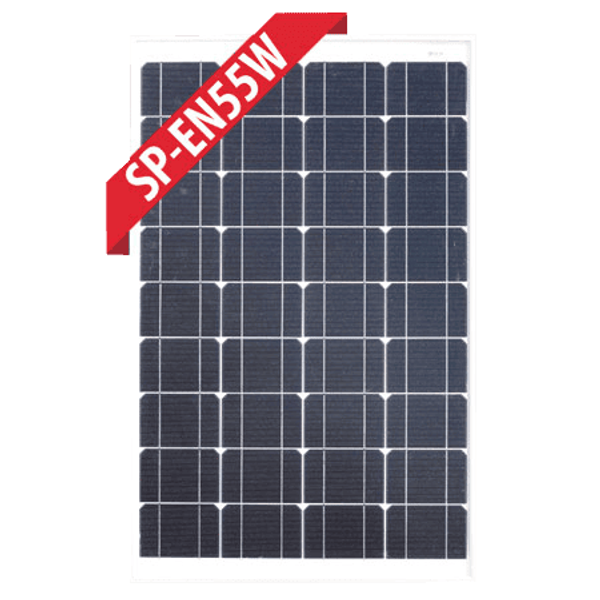
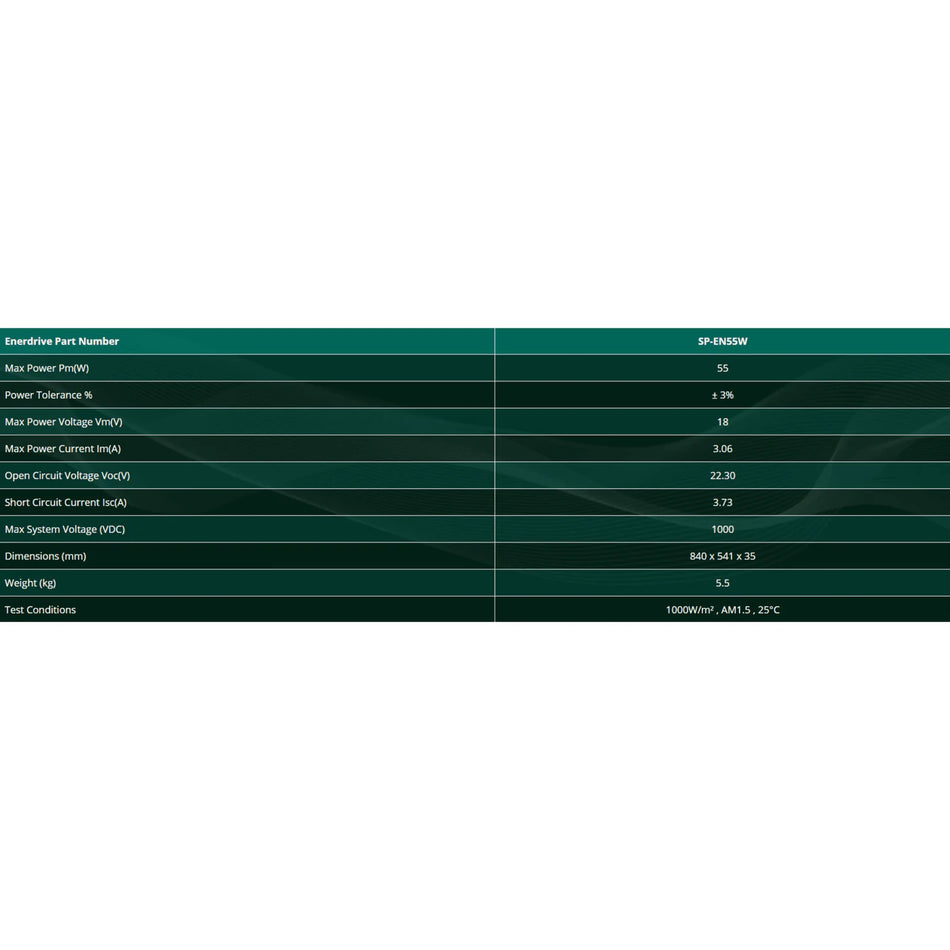
Enerdrive 55W Silver Frame Monocrystalline Fixed Solar Panel
Regular price$153.00
Availability: In Stock at Enerdrive Warehouse