 Solar
 Solar Panels
 Solar Charge Controllers
 Mounting
 Solar Accessories
 Solar Kits
 Batteries
 Batteries
 Battery Management
 Battery Boxes
 Battery Kits
 Chargers
 Mains Chargers
 DC-DC Chargers
 Alternators & Regulators
 Charger Kits
 Inverters
 Inverters
 Inverter Kits
 Electrical
 Circuit Protection
 Connectors, Busbars & Terminals
 Switch Panels & Accessories
 240V Equipment
 EV Chargers
 Starlink
 Cables
 Cables
 Pre-made Leads
 Cable Management
 Converters
 DC-DC Converters
 Transformers
 Monitoring
 Monitoring
 Monitoring Kits
 Kits
 Pre-Wired Boards
 4x4/Canopy Power Systems
 Solar Kits
 Inverter Kits
 Charger Kits
 Battery Kits
 Monitoring Kits
 By Application
 Caravan, Camper & RV
 Camping & Portable
 Marine/ Boat
 4x4/4WD & Off-Road
 Off-Grid Homes & Sheds
 Golf Carts
 Portable 12V Car Chargers
 Portable 24V Bus/Truck Chargers
 By Brand






































 Pre-Wired Boards
 4x4/Canopy Power Systems
 Solar Kits
 Inverter Kits
 Charger Kits
 Battery Kits
 Monitoring Kits








































Battery Isolators/Splitters
Split one alternator's output across two or three banks with Victron Argodiode and Argo FET isolators
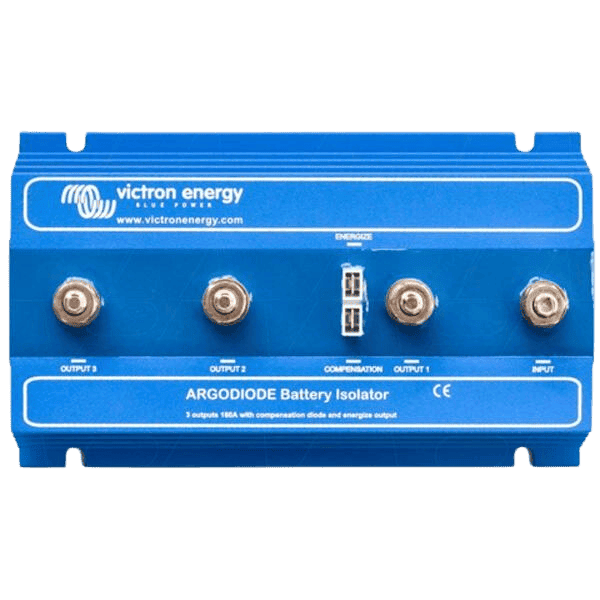
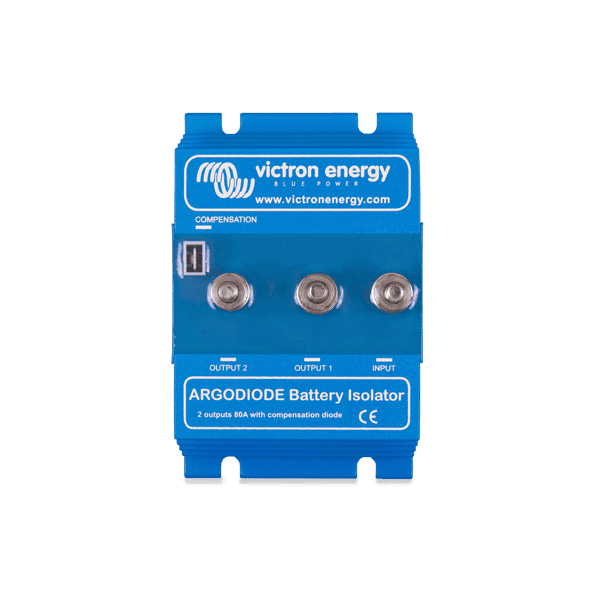
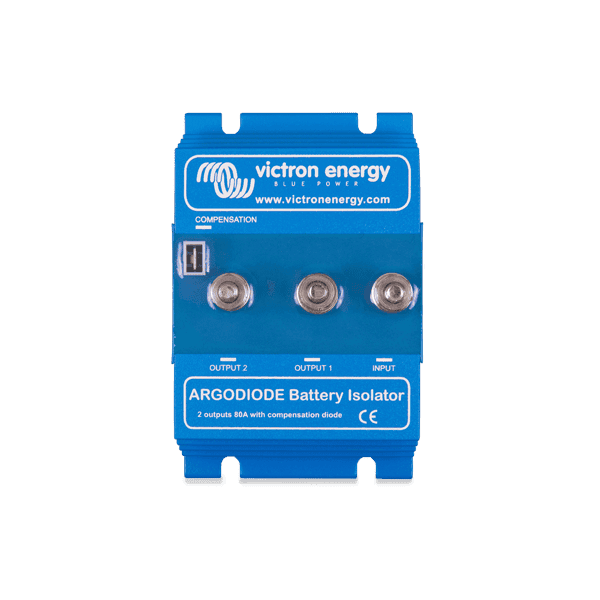
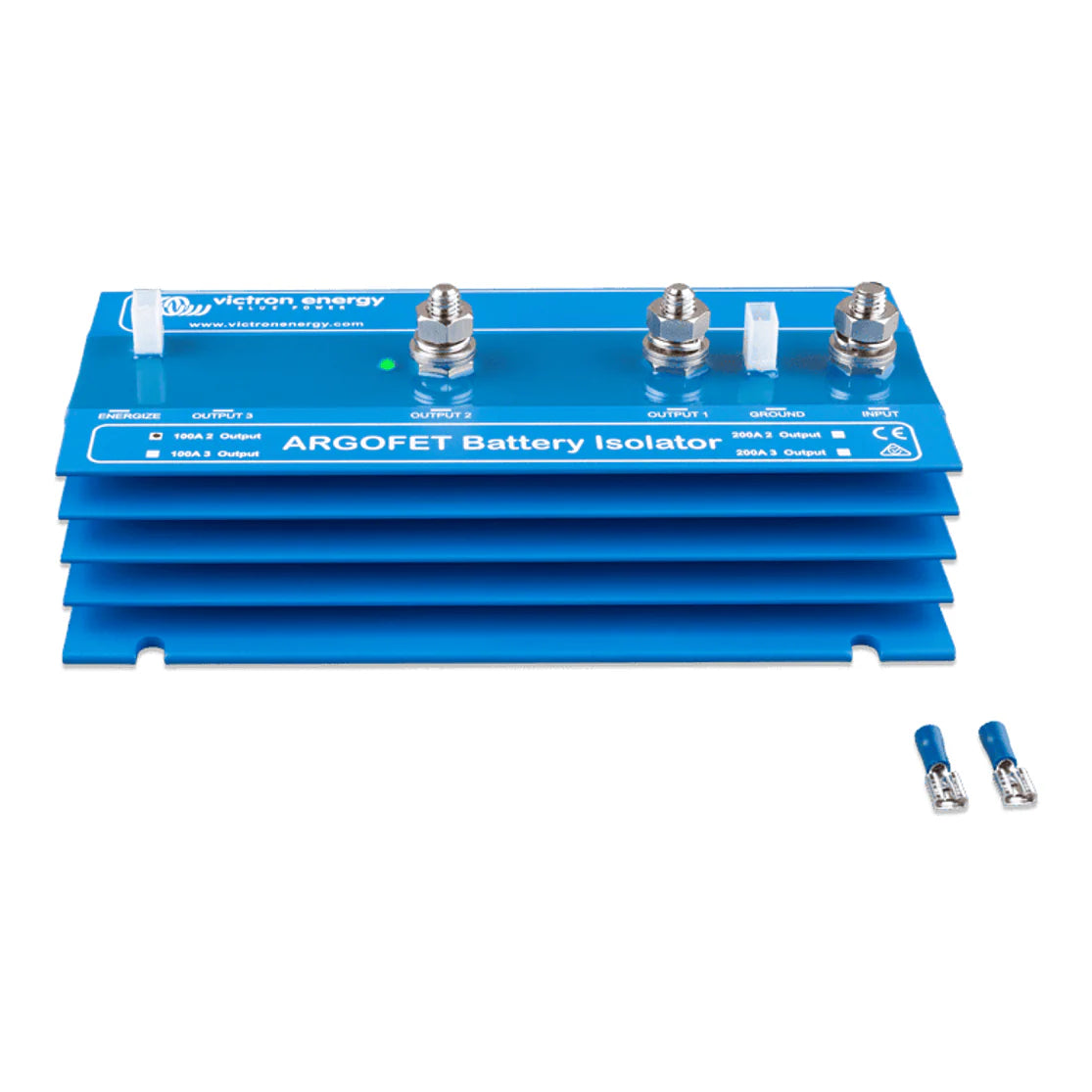
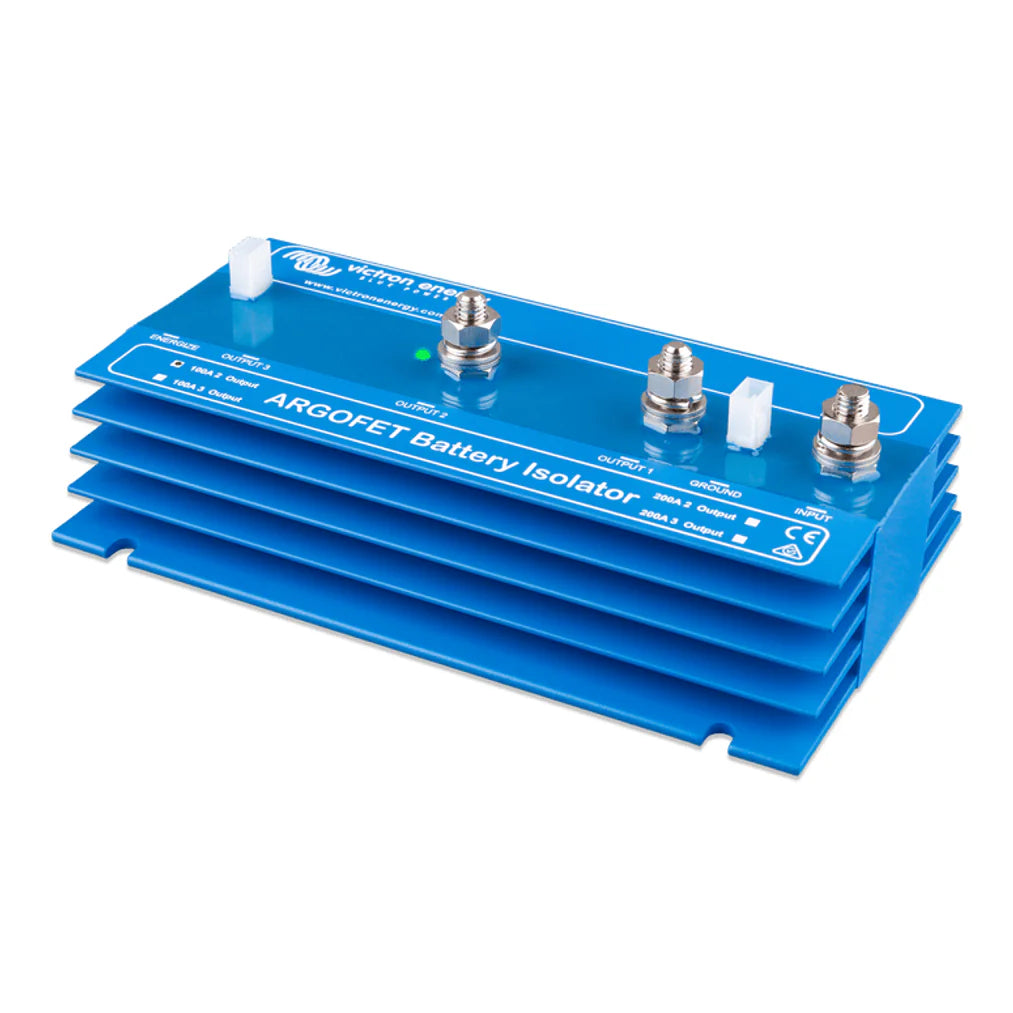
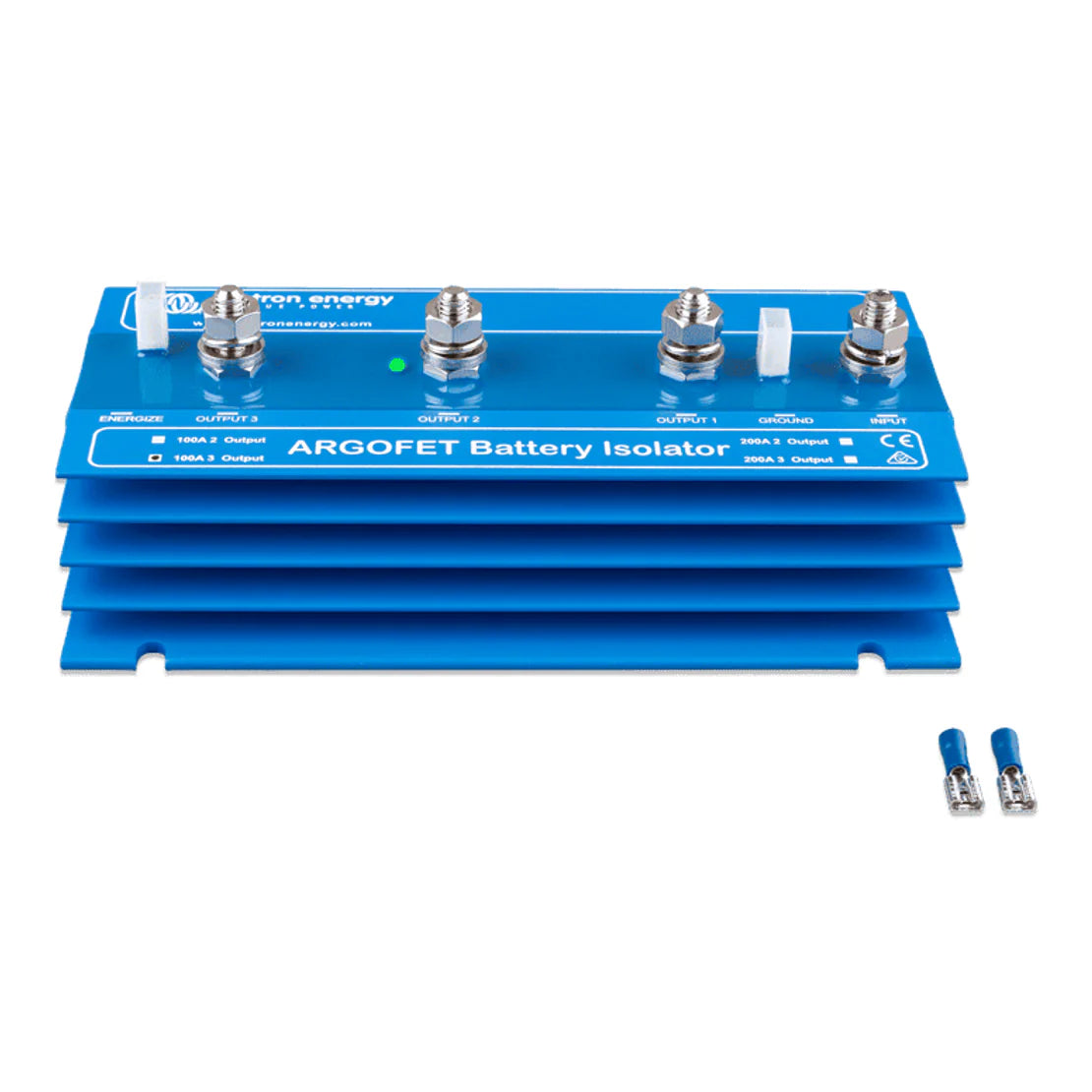
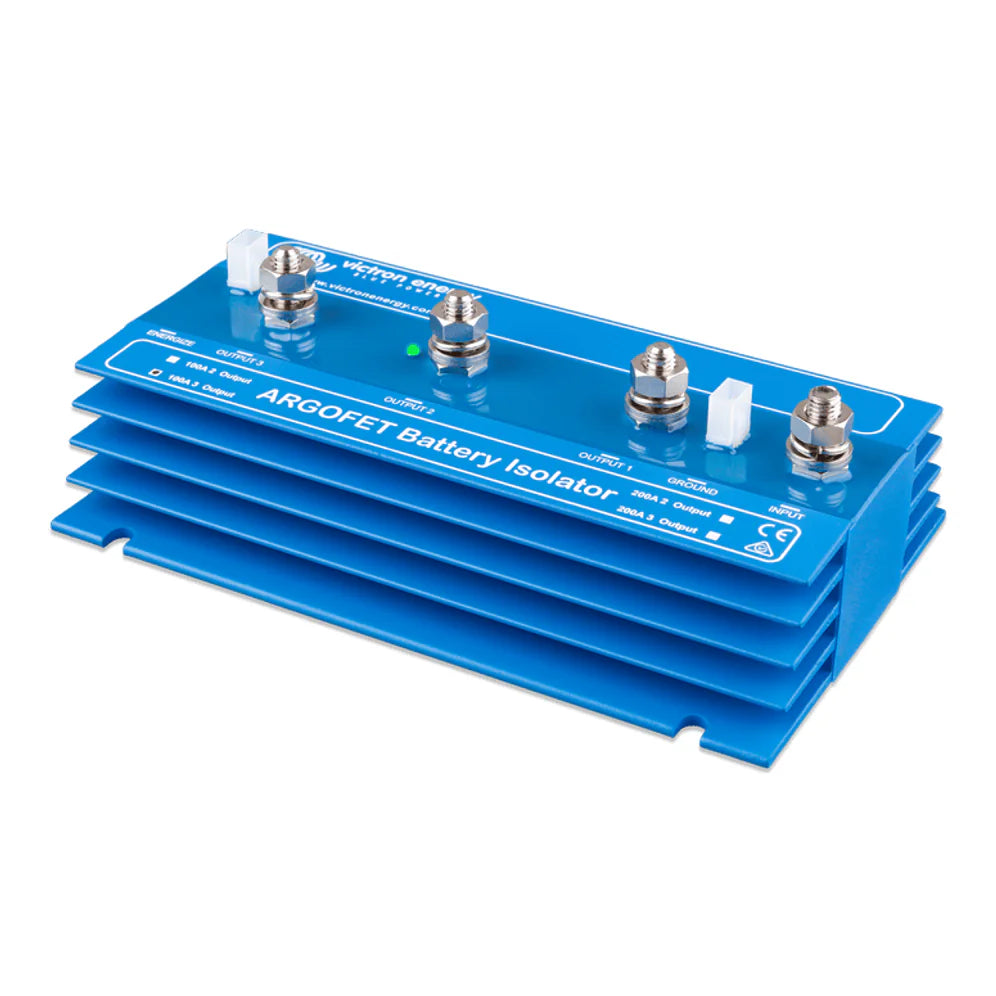

Victron Battery Isolators and Splitters for Multi-Battery Charging
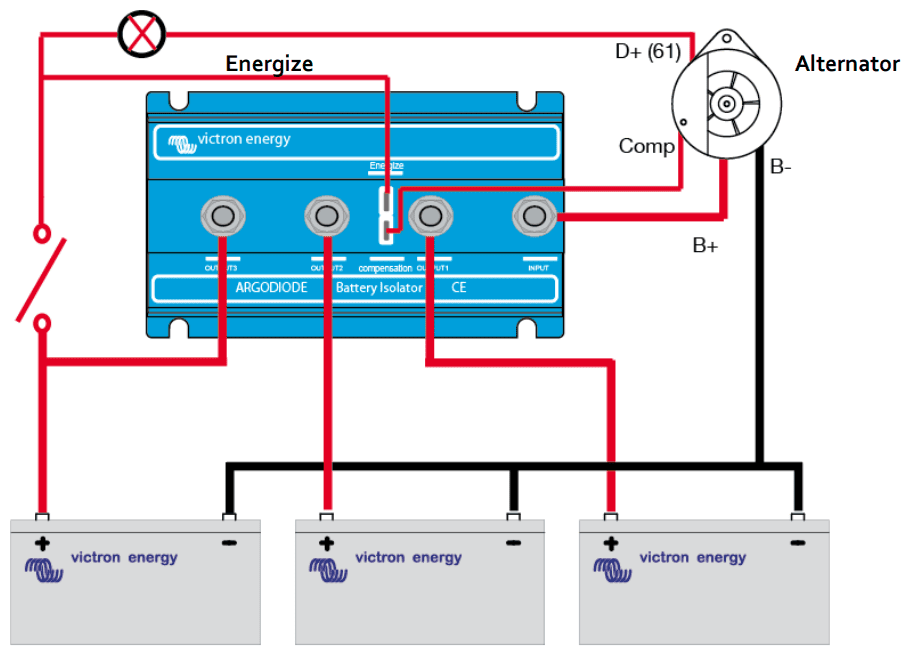
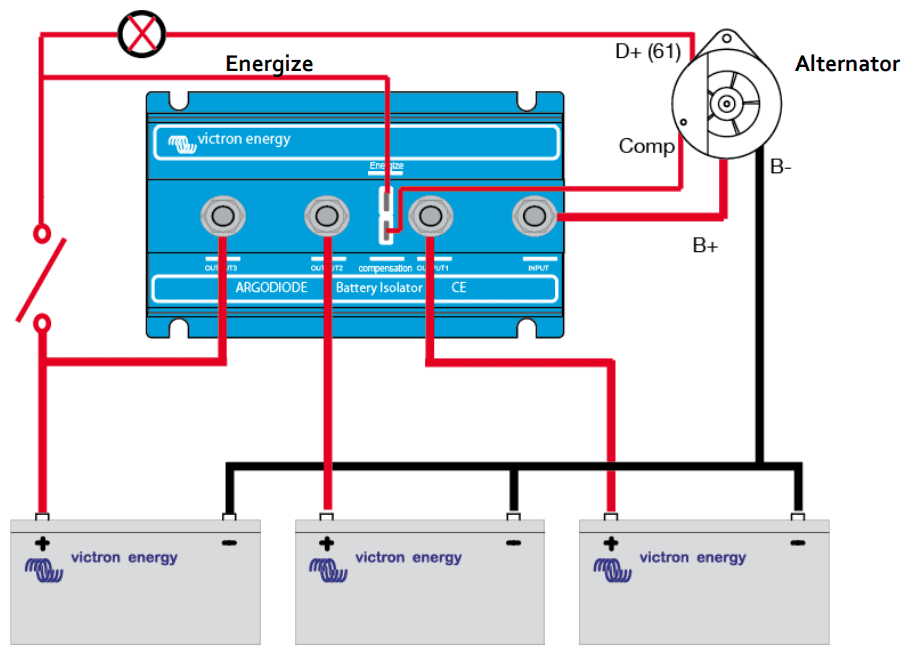
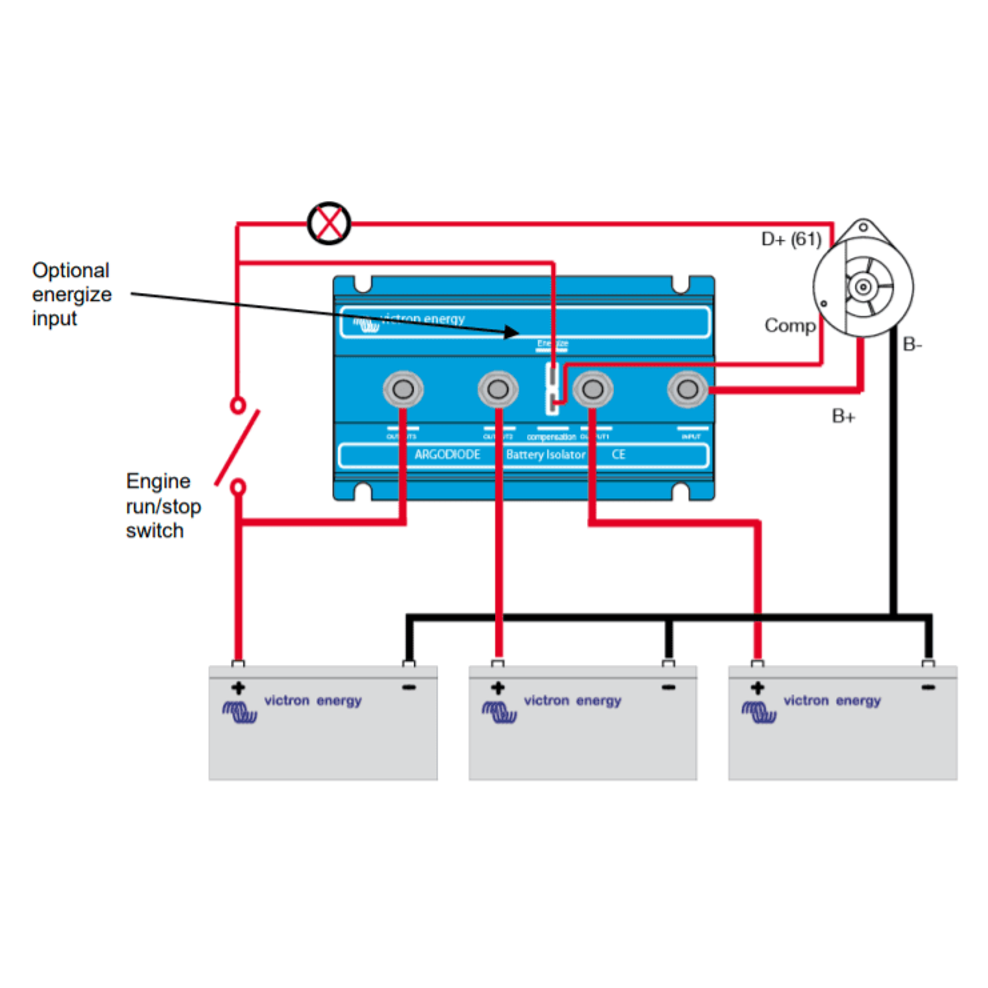
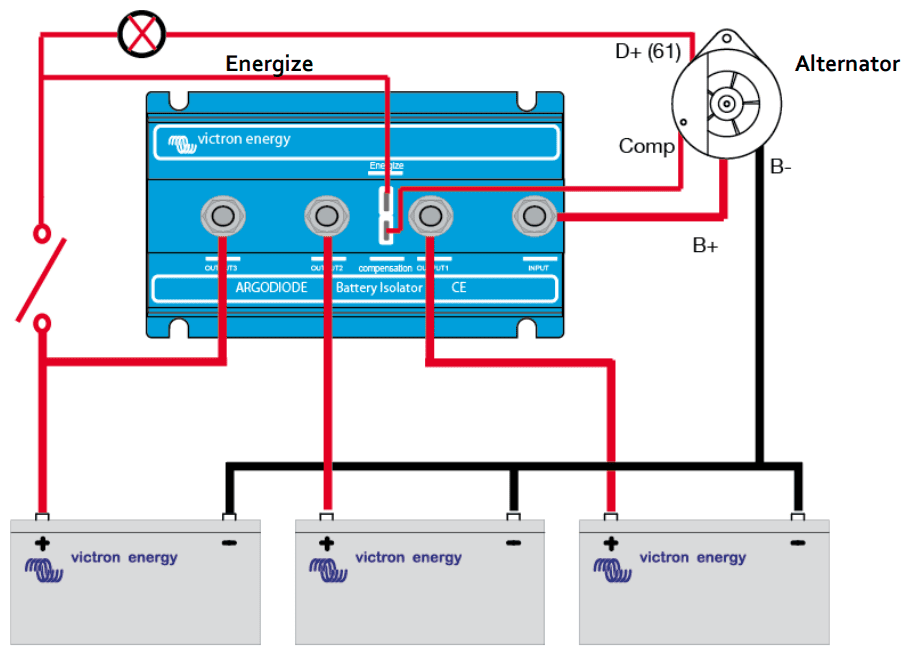
A battery isolator lets one alternator charge two or three separate battery banks while keeping those banks electrically separated. Your start battery stays protected when house loads such as fridges, lighting or pumps draw down the auxiliary bank. This range covers Victron Argodiode diode isolators and Victron Argo FET electronic isolators, rated from 80A to 200A, for caravan, RV, marine, 4WD, truck and commercial vehicle charging systems.
Argodiode vs Argo FET: Choosing Your Isolator Type
Both series do the same core job of splitting alternator output and blocking current from flowing back between batteries. They differ in how they do it.
- Argodiode isolators (80A to 180A): Diode-based splitters with a solid-state design and no moving contacts. Models include the 80-2SC, 80-2AC, 120-2AC and 160-2AC for two batteries, plus the 100-3AC, 140-3AC and 180-3AC for three batteries.
- Argo FET isolators (100A to 200A): MOSFET-based electronic isolators with a lower voltage drop than conventional diode isolators. This helps the batteries receive more of the alternator's charging voltage. Choose the Argo FET 100-2 or 200-2 for two batteries, or the 100-3 for three.
- Number of outputs: Models ending in -2 suit a start battery plus one auxiliary bank. Models ending in -3 add a third output for an extra house, thruster or winch battery.
Sizing a Battery Isolator Correctly
Select an isolator with a current rating at or above your alternator's maximum output. A margin above that figure is sensible for engine bays and lockers where ambient temperatures run high. Make sure the cable from the alternator to the isolator, and from the isolator to each battery, is sized for the full current and cable run length. The DC cable sizing and system wiring calculator can help you plan conductor sizes before installation.
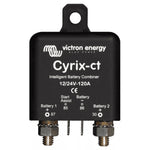
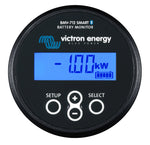
If your system uses a voltage-sensing relay rather than a split-charge diode, compare options in our battery combiners and VSRs range. To track how much charge reaches each bank, pair your isolator with one of our battery monitors and smart shunts.
Battery Isolator FAQs
What is the difference between a battery isolator and a battery splitter?
The terms are generally used interchangeably. Both describe a device that divides one charging source between multiple batteries while preventing those batteries from discharging into each other.
When should I choose an Argo FET over an Argodiode?
Choose an Argo FET when a lower voltage drop matters to you. This applies, for example, when you want the batteries to see closer to full alternator voltage without adjusting the alternator. Argodiode models remain a proven option across a wide range of current ratings.
Can I connect three batteries to one alternator?
Yes. The Argodiode 100-3AC, 140-3AC and 180-3AC, along with the Argo FET 100-3, each provide three isolated outputs from a single alternator input.
Find the Right Victron Isolator for Your Charging System
Match your alternator output and battery count to the model list above. Then choose between the Argodiode and Argo FET series based on your voltage drop requirements. Order your Victron battery isolator today to keep your start battery protected and your auxiliary banks charging every time the engine runs.