 Solar
 Solar Panels
 Solar Charge Controllers
 Mounting
 Solar Accessories
 Solar Kits
 Batteries
 Batteries
 Battery Management
 Battery Boxes
 Battery Kits
 Chargers
 Mains Chargers
 DC-DC Chargers
 Alternators & Regulators
 Charger Kits
 Inverters
 Inverters
 Inverter Kits
 Electrical
 Circuit Protection
 Connectors, Busbars & Terminals
 Switch Panels & Accessories
 240V Equipment
 EV Chargers
 Cables
 Cables
 Pre-made Leads
 Cable Management
 Converters
 DC-DC Converters
 Transformers
 Monitoring
 Monitoring
 Monitoring Kits
 Kits
 Pre-Wired Boards
 4x4/Canopy Power Systems
 Solar Kits
 Inverter Kits
 Charger Kits
 Battery Kits
 Monitoring Kits
 By Application
 Caravan, Camper & RV
 Camping & Portable
 Marine/ Boat
 4x4/4WD & Off-Road
 Off-Grid Homes & Sheds
 Golf Carts
 Portable 12V Car Chargers
 Portable 24V Bus/Truck Chargers
 By Brand





















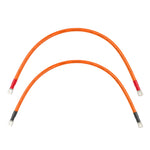
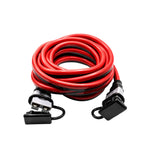












 Pre-Wired Boards
 4x4/Canopy Power Systems
 Solar Kits
 Inverter Kits
 Charger Kits
 Battery Kits
 Monitoring Kits







































Estimate touring energy needs
List fridge, lighting, communications and other daily loads before matching the auxiliary battery and charging.
Open the energy sizing tool
4x4 and touring power
Off-grid power systems for 4x4 touring
Build around the auxiliary battery, alternator, campsite loads, available mounting space and conditions encountered off road.
Batteries, inverters, DC-DC chargers and solar built for 4WD touring, canopies and remote camps.
Start with the part of the system
Start with the equipment being added or replaced, then check alternator behaviour, battery limits, environment, mounting, cable and protection.
 Deployable generationSolar blankets and briefcasesCompare portable solar options that can be positioned around camp and packed for touring.
 Vehicle-mounted generationRoof-rack solar panelsCompare fixed and lightweight panels for supported roof-rack, canopy and vehicle installations.
 Auxiliary energy storage4x4 batteriesCompare deep-cycle, under-bonnet and dual-purpose batteries by environment, current and dimensions.
 Charge while drivingDual-battery systemsCompare DC–DC chargers, relays and related equipment for supported alternator and auxiliary-battery systems.
 AC power on the road4x4 invertersCompare inverter output, startup demand, mounting and battery-current requirements for touring loads.
Full range
Use the catalogue filters for product type, voltage, application, brand and availability. Confirm vehicle compatibility, battery and alternator limits, cable, protection, vibration and temperature requirements before selection.


Customer stories
Before final selection
Vehicle compatibility, auxiliary loads, alternator behaviour, solar, battery limits, cable runs and off-road conditions all shape the system.
List fridge, lighting, communications and other daily loads before matching the auxiliary battery and charging.
Open the energy sizing toolUse expected current and complete circuit length for an initial cable-size and voltage-drop check.
Open the cable sizing toolUnderstand the electrical difference before matching a DC–DC charger with the vehicle and auxiliary system.
Read the isolation guideSystem check
Send the vehicle and system details below and our off-grid team can help narrow suitable product groups and ratings.
Selected 4x4 buyer guides
Use these guides to estimate energy and understand solar, DC–DC charging, batteries, cable and protection.

If you are choosing a portable solar panel for camping, the easiest way to get it right is to size it from your daily...
Read guide
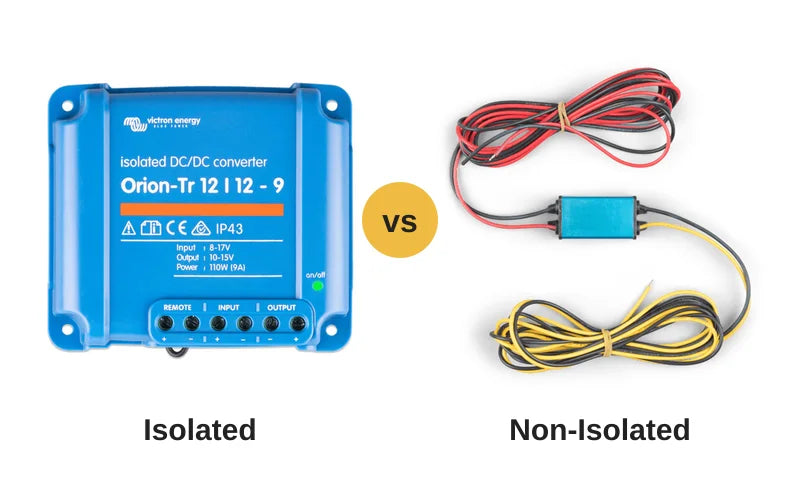
When it comes to power conversion, choosing between isolated and non-isolated converters or DC-DC chargers can be a challenging task. Both have their unique...
Read guide
Our guide covers the basics of the differences between automotive, marine, solar, and welding/battery cables, providing you with the knowledge to make informed choices...
Read guide
This interactive calculator will help you understand your RV's full power system, including the inverter, battery charger, DC-DC Charger, battery, solar panels, MPPT, and...
Read guide
Topics include current, selecting cable, cable resistance, voltage drop, battery bank wiring, fuses and circuit breakers, fuses, shunts, earth wiring, solar panels, voltage sensing...
Read guide
Discover the key differences between Lithium and Lead-Acid batteries. Understand their performance, durability, cost, and environmental impact to make an informed decision for your...
Read guideAbout this range
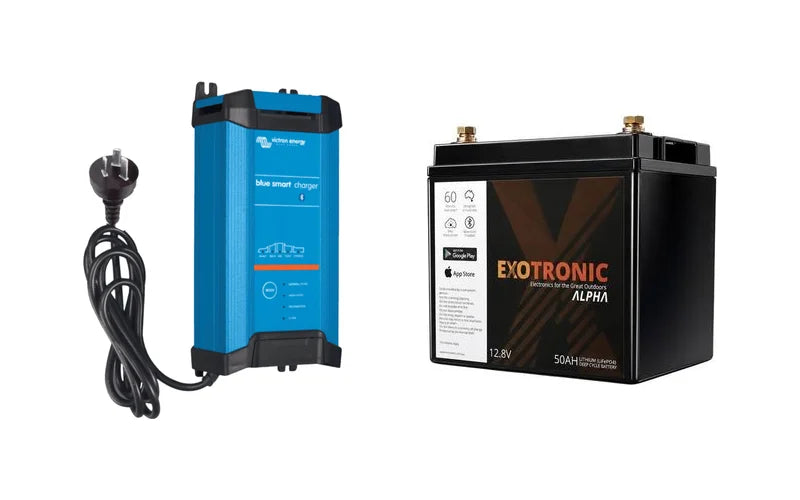
A dependable 12V system keeps your fridge cold, lights on and devices charged long after you leave the bitumen. This range brings together auxiliary and under bonnet batteries, pure sine wave inverters, DC-DC chargers and fixed or portable solar from Victron, Enerdrive, Invicta, Exotronic, Century, Power-Sonic and Sunman. You can build a 4x4 setup one component at a time or start from a matched package such as the Exotronic 4WD Starter Kit or 4WD Independence Kit.
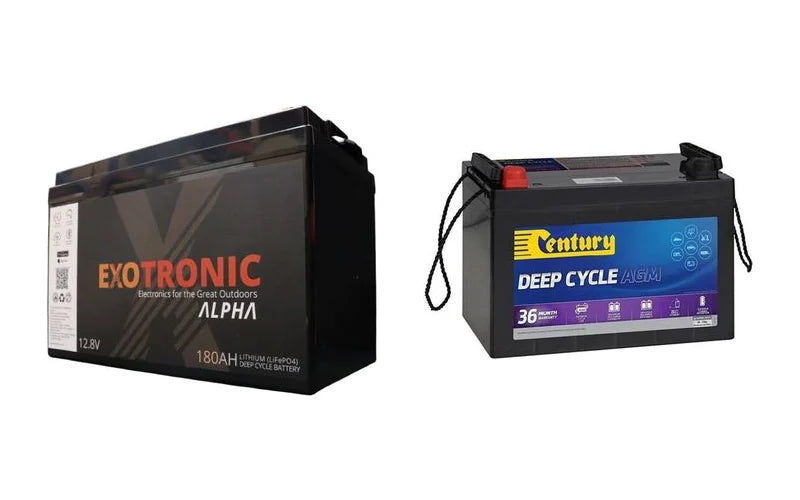
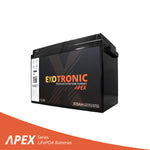
Engine bays run hot, so not every lithium battery belongs under the bonnet. Choose a battery that is specified for engine bay use. The Invicta Hybrid lithium range (LN2, LN3, 80DL, 95D, 95DL, H31H and Max Extreme) covers common case sizes with ratings from 800 to 1400 CCA. If you are mounting in a canopy, drawer or rear cargo area, the Enerdrive B-TEC Slimline, Exotronic Alpha G2 Slimline and Victron SuperPack lithium batteries suit tight spaces. Rugged AGM options from Victron, Century and Power-Sonic are also available. Compare engine bay and auxiliary options in our 4x4 and off-road batteries range.
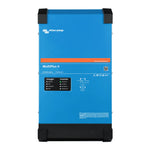
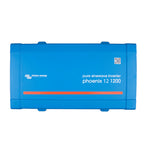
A 4WD inverter runs laptops, camera chargers, power tool chargers and small kitchen appliances from your battery bank. The range starts with compact units such as the Enerdrive ePower 400W and the Victron Phoenix VE.Direct 250VA. It extends to the Enerdrive 2000W and 2600W models with RCD and AC transfer switch, the Victron Phoenix Smart range and the MultiPlus inverter/chargers. Browse dedicated 4x4 and off-road inverters, or work out continuous load and surge requirements with our guide to understanding inverter features and sizing.
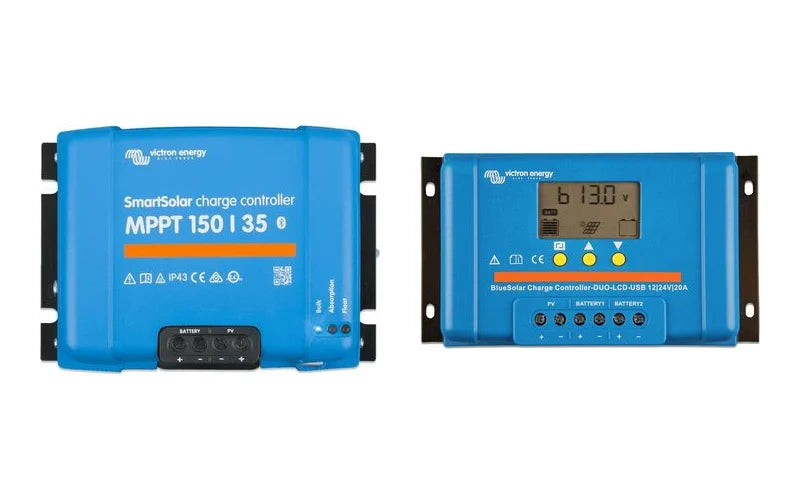
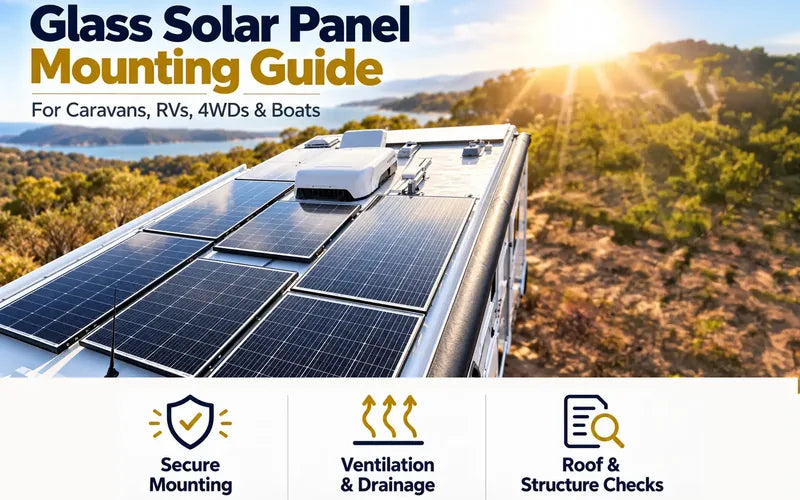
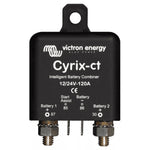
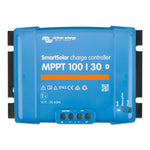
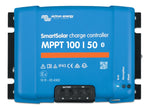
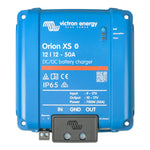
Smart alternators and lithium chemistry both call for a proper DC-DC charger. Options include the Victron Orion XS 50A, the Orion XS 1400 and isolated or non-isolated Orion-Tr Smart models. The Enerdrive 40A+ and 100A DC-DC/MPPT chargers combine alternator and solar input in one unit. The Victron Cyrix-ct VSR suits simpler AGM dual battery setups. For solar, narrow Exotronic Fusion and Enerdrive fixed panels fit roof racks and canopies. Exotronic 200W and 300W folding panels and blankets let you park in the shade and still charge in the sun.
Pick components that work together and you will spend less time managing power and more time exploring. Choose your battery, charger, inverter and solar from proven brands and set up your 4WD for reliable off-grid touring before your next trip.
Technical planning questions
These answers are planning guidance. Exact vehicle, product and battery requirements remain the authority.
No. The exact battery must be approved for the mounting orientation, under-bonnet temperature, vibration and charging conditions involved. Many batteries, particularly some lithium models, are not suitable for high-temperature engine-bay installation. Follow the battery and vehicle requirements and provide secure restraint and protection.
A compatible DC–DC charger is commonly used to provide a controlled auxiliary-battery profile when alternator voltage varies, but selection depends on the vehicle, alternator control, battery chemistry and manufacturer requirements. Confirm ignition or engine-run detection, input range, current limit, cable and protection for the exact installation.
Roof panels generate whenever suitable sun reaches the vehicle and require no campsite setup. Blankets and portable panels can be aimed at the sun or moved away from vehicle shade but need storage, deployment and cable management. Many touring systems combine a smaller fixed array with a compatible portable input.
Size from simultaneous running loads and startup surge, then calculate the battery-side current including inverter losses. The auxiliary battery, BMS, cable, fuses, terminals and connectors must all support that current. High-wattage cooking, heating, compressors and tools can require substantially larger batteries and conductors.
Vehicle cable routes can be long and charging currents high. Excess voltage drop wastes energy, heats the circuit and can prevent a charger or load from operating as intended. Calculate using the complete current path, expected continuous current, conductor temperature and installation method, then verify the equipment's permitted voltage range.
Yes. Where a cable can be energised from a battery at either end, each battery connection needs correctly selected protection close to that connection. Both batteries contain stored energy, and the protection is there to protect the cable and equipment from fault current. Follow the charger, battery, cable and vehicle requirements.
Check heat, vibration, dust, water, ventilation, mounting orientation, cable abrasion and impact risk for every product and connection. Equipment mounted in a cabin, canopy, tray or engine bay may need different ratings. Maintain manufacturer clearances and do not assume a sealed enclosure removes cooling requirements.
Powering Your Adventure