 Solar
 Solar Panels
 Solar Charge Controllers
 Mounting
 Solar Accessories
 Solar Kits
 Batteries
 Batteries
 Battery Management
 Battery Boxes
 Battery Kits
 Chargers
 Mains Chargers
 DC-DC Chargers
 Alternators & Regulators
 Charger Kits
 Inverters
 Inverters
 Inverter Kits
 Electrical
 Circuit Protection
 Connectors, Busbars & Terminals
 Switch Panels & Accessories
 240V Equipment
 EV Chargers
 Starlink
 Cables
 Cables
 Pre-made Leads
 Cable Management
 Converters
 DC-DC Converters
 Transformers
 Monitoring
 Monitoring
 Monitoring Kits
 Kits
 Pre-Wired Boards
 4x4/Canopy Power Systems
 Solar Kits
 Inverter Kits
 Charger Kits
 Battery Kits
 Monitoring Kits
 By Application
 Caravan, Camper & RV
 Camping & Portable
 Marine/ Boat
 4x4/4WD & Off-Road
 Off-Grid Homes & Sheds
 Golf Carts
 Portable 12V Car Chargers
 Portable 24V Bus/Truck Chargers
 By Brand


































 Pre-Wired Boards
 4x4/Canopy Power Systems
 Solar Kits
 Inverter Kits
 Charger Kits
 Battery Kits
 Monitoring Kits







































Autotransformers
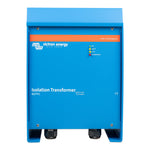
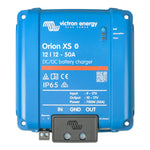
Victron 50A and 100A autotransformers for 120/240V voltage conversion and split-phase load balancing.

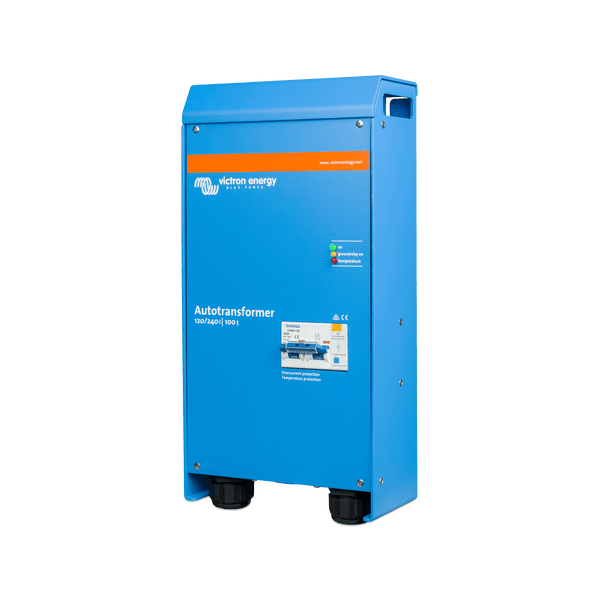
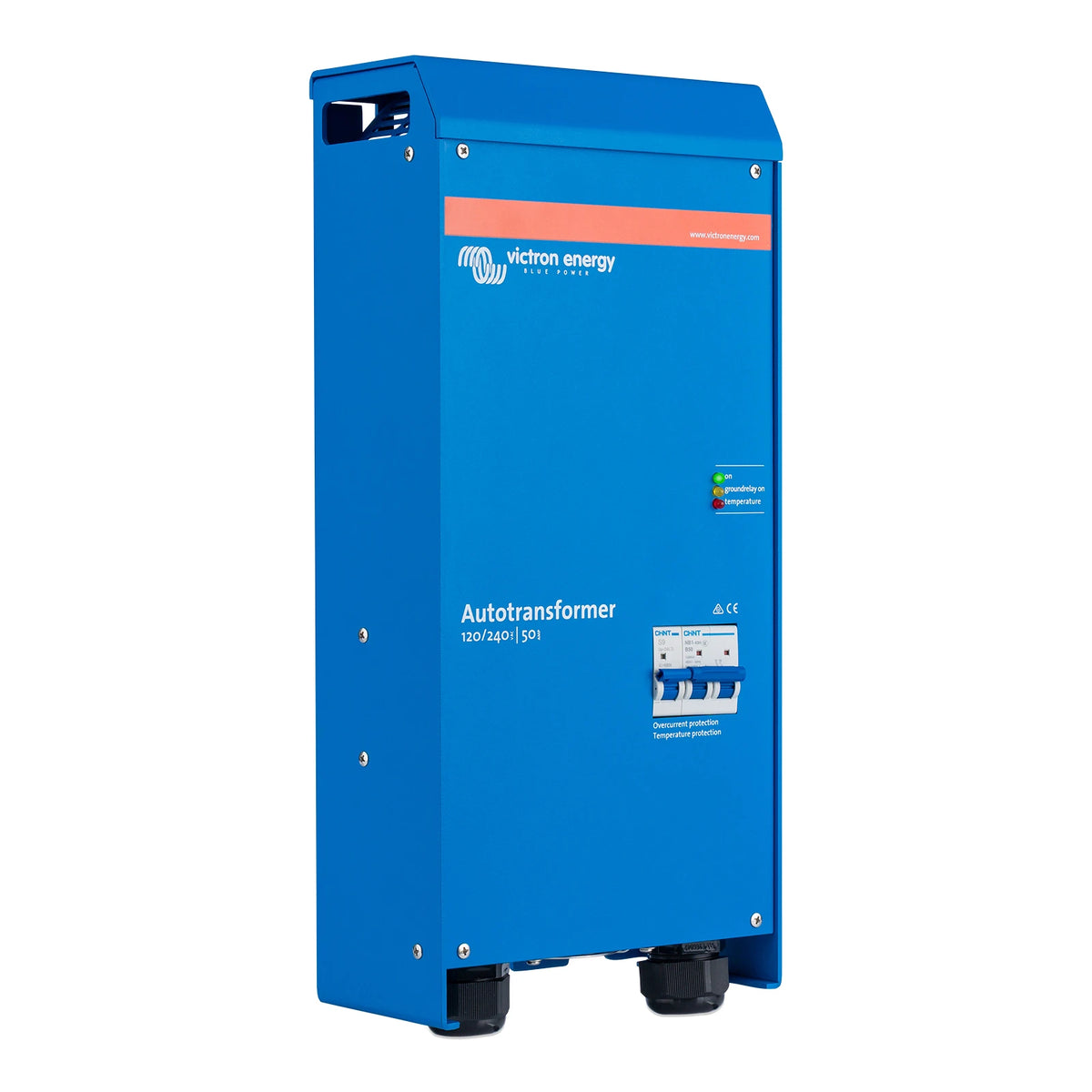
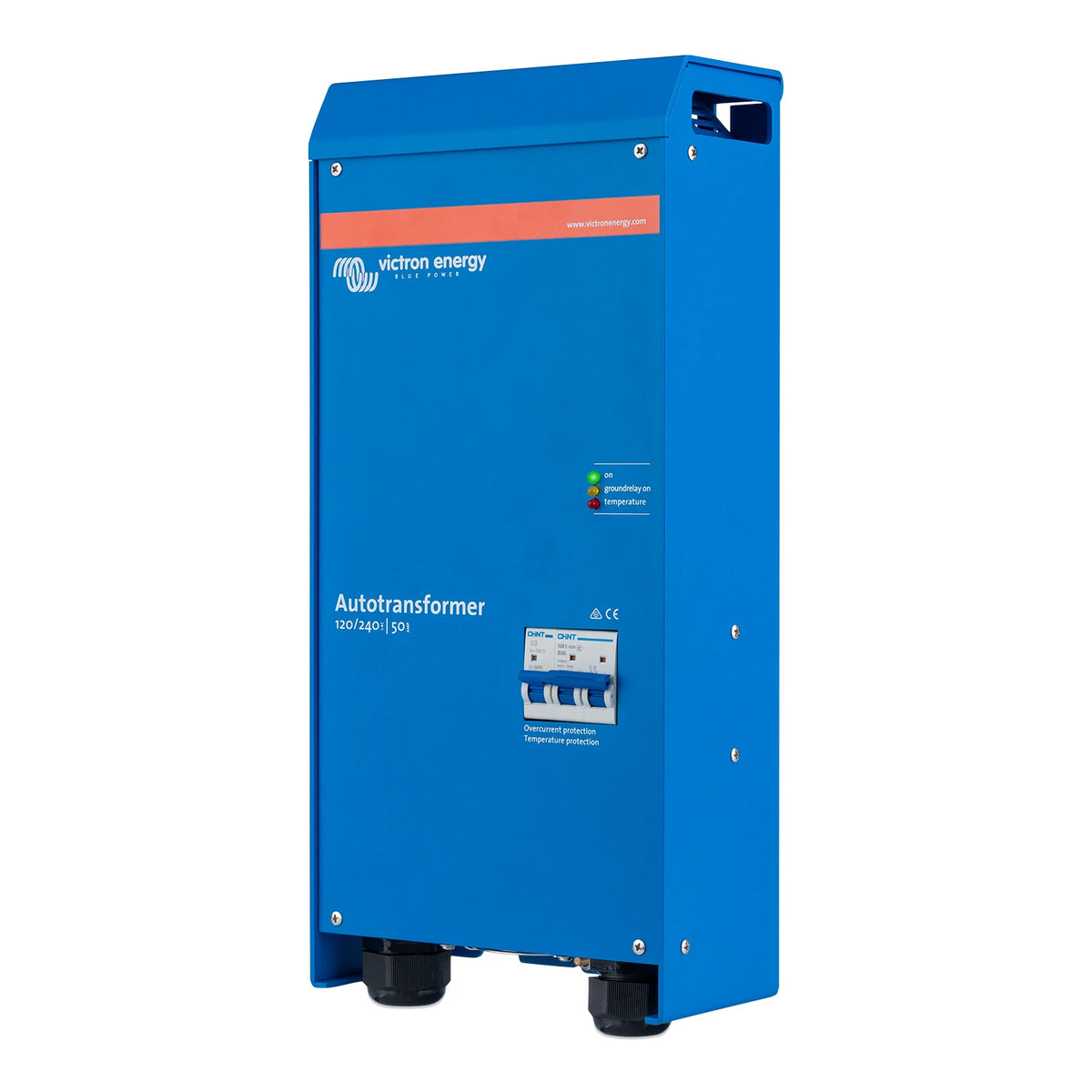
Victron Autotransformers for 120/240V Conversion and Split-Phase Balancing
Victron autotransformers handle two common AC tasks in marine, RV and off-grid systems. They step voltage up or down between 120V and 240V, and they balance loads on a 120/240V split-phase system. This collection includes two current ratings, the Victron Autotransformer 120/240V 100A and the Victron Autotransformer 120/240VAC 50A. You can match the unit to your shore power supply, inverter setup and expected load.
How an Autotransformer Works
An autotransformer uses a single continuous winding with a tap point. This lets it convert 120V to 240V (step-up) or 240V to 120V (step-down). In a split-phase system, it can also supply the neutral and absorb unbalanced current between the two legs. This helps when a heavy 120V appliance loads one leg more than the other.
An autotransformer does not electrically separate the input from the output. If you need galvanic isolation between shore power and your vessel, compare these units with our isolation transformers.
Choosing Between the 50A and 100A Models
- Victron Autotransformer 120/240VAC 50A: Suits smaller vessels, imported RVs and moderate AC loads where the shore power or inverter supply sits within a 50A rating.
- Victron Autotransformer 120/240V 100A: Suits larger boats, off-grid homes and commercial installs with higher continuous AC demand or bigger split-phase inverter systems.
- Step-up or step-down: Confirm which direction you need. Common examples are 120V shore power feeding a 240V boat, or a 240V supply running 120V equipment.
- Split-phase balancing: Check whether your system uses stacked inverters or a 120/240V distribution board that will see unbalanced loads.
Common Applications
Marine and boats: Cruising vessels that visit marinas with different shore power standards can use an autotransformer to adapt the incoming voltage to their onboard system.
Imported RVs and caravans: North American RVs built around 120V appliances can be adapted to run from Australian 240V supply.
Off-grid and tiny homes: Some split-phase off-grid systems use an autotransformer to balance 120V loads across both legs. This helps prevent one inverter carrying the full load.
Correct cable sizing, overcurrent protection and earthing are essential for any AC installation. Our guide to wiring systems with batteries, inverters and chargers covers the fundamentals before you plan your layout. AC work should be completed by a licensed electrician.
Victron Autotransformer FAQs
Can a Victron autotransformer run 120V appliances on Australian 240V power?
Yes. In step-down configuration, an autotransformer converts 240V to 120V for compatible equipment. Size the unit to the total current your 120V loads will draw.
Does an autotransformer prevent galvanic corrosion on a boat?
No. An autotransformer does not isolate shore power from the vessel. Boats needing corrosion protection should consider an isolation transformer from the wider transformers range.
Do I need the 50A or 100A model?
Work out the maximum continuous current of your shore supply or inverter system and choose the model with a rating above it. The 100A model suits larger split-phase systems and higher AC loads.
Get the Right Voltage Conversion for Your System
Choose the Victron 50A or 100A autotransformer to suit your load, and connect 120V and 240V equipment with confidence. Order online today, or contact our team with your shore power and inverter details for help selecting the correct model.