 Solar
 Solar Panels
 Solar Charge Controllers
 Mounting
 Solar Accessories
 Solar Kits
 Batteries
 Batteries
 Battery Management
 Battery Boxes
 Battery Kits
 Chargers
 Mains Chargers
 DC-DC Chargers
 Alternators & Regulators
 Charger Kits
 Inverters
 Inverters
 Inverter Kits
 Electrical
 Circuit Protection
 Connectors, Busbars & Terminals
 Switch Panels & Accessories
 240V Equipment
 EV Chargers
 Starlink
 Cables
 Cables
 Pre-made Leads
 Cable Management
 Converters
 DC-DC Converters
 Transformers
 Monitoring
 Monitoring
 Monitoring Kits
 Kits
 Pre-Wired Boards
 4x4/Canopy Power Systems
 Solar Kits
 Inverter Kits
 Charger Kits
 Battery Kits
 Monitoring Kits
 By Application
 Caravan, Camper & RV
 Camping & Portable
 Marine/ Boat
 4x4/4WD & Off-Road
 Off-Grid Homes & Sheds
 Golf Carts
 Portable 12V Car Chargers
 Portable 24V Bus/Truck Chargers
 By Brand


































 Pre-Wired Boards
 4x4/Canopy Power Systems
 Solar Kits
 Inverter Kits
 Charger Kits
 Battery Kits
 Monitoring Kits








































Class T/ JJN Fuses & Holders
Fast-acting Class T fuses, Blue Sea holders and Victron Lynx protection for high-current battery banks.
Class T Fuses and Holders for High-Current Lithium Battery Systems
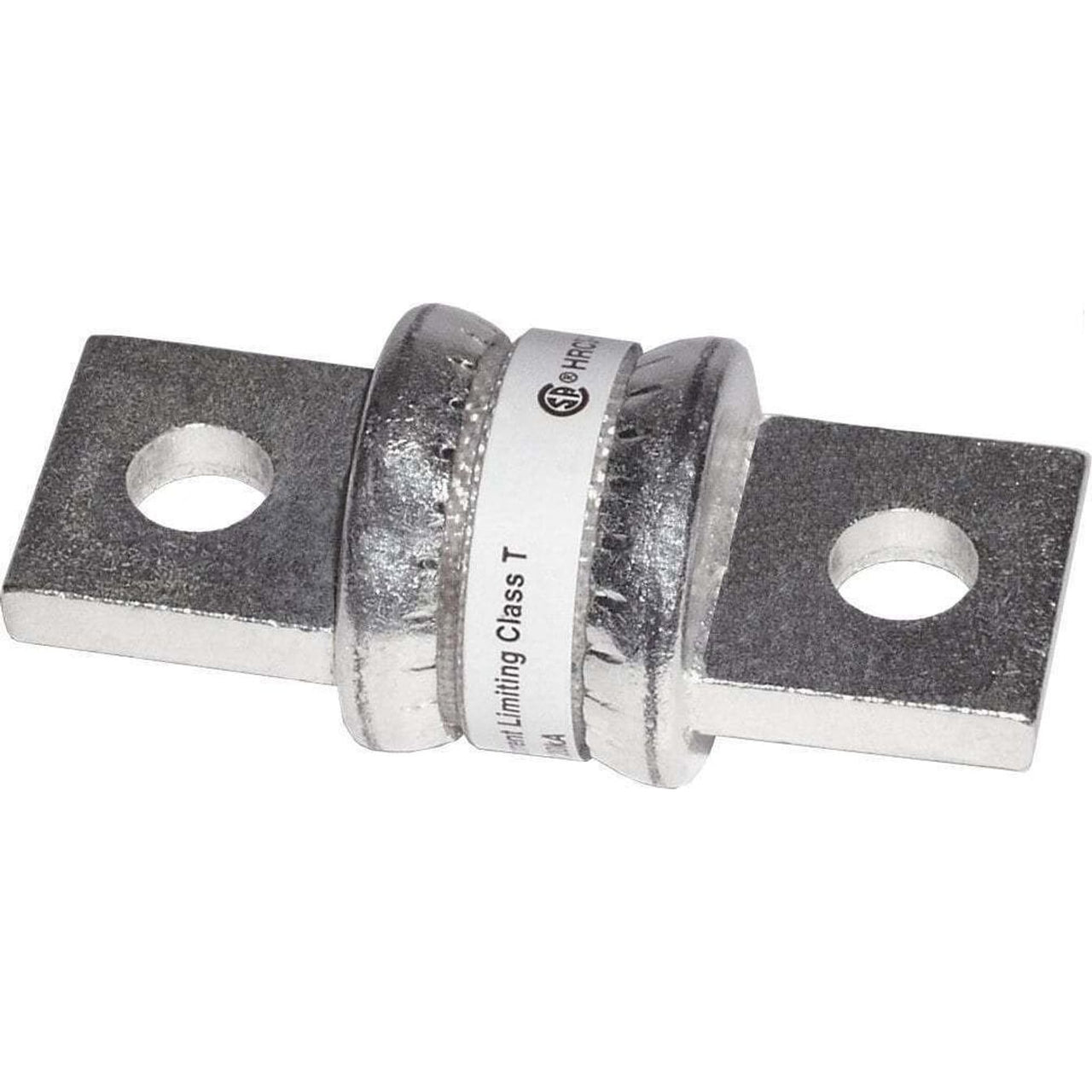
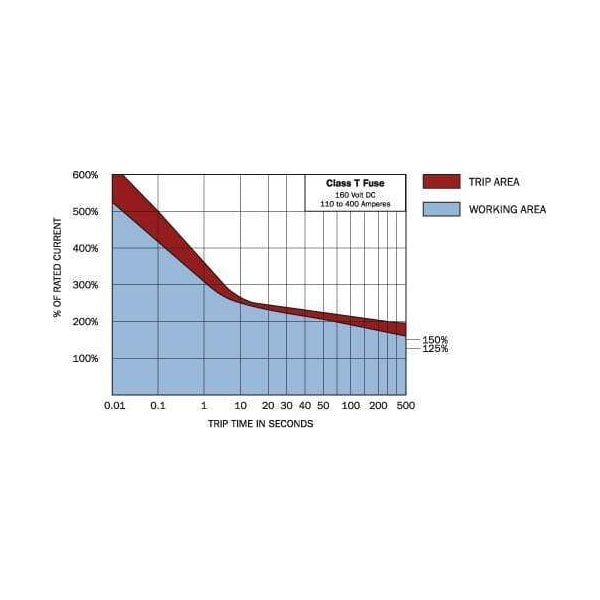
Class T fuses, also called JJN fuses, are the usual choice for main battery protection where large lithium banks can deliver very high fault currents. They have a high interrupt rating and fast-acting response, so they clear a short circuit quickly. This helps protect cabling, inverter-chargers and the battery bank in caravan, RV, marine, 4WD, off-grid and commercial installations.
Lithium iron phosphate batteries have very low internal resistance. A dead short can therefore produce far more current than a standard blade or midi fuse is designed to interrupt. A T class fuse at the battery positive is designed to break that current safely. It is a common specification for large inverters, battery-to-busbar runs and high-capacity house banks.
Blue Sea Class T Fuses and Fuse Block Holder
This range covers Blue Sea Class T fuses in 225A, 250A, 300A, 350A and 400A ratings. All of them suit the Blue Sea 225 to 400A Class T Fuse Block Holder with Insulating Cover. The cover shields the live terminals from accidental contact and dropped tools. Buying the fuse and holder together gives you a matched Class T fuse and holder assembly for your main battery circuit.
Victron Lynx Class-T Power In
For modular Victron distribution systems, the Victron 1000A Lynx Class-T Power In M10 Busbar brings Class T protection into the Lynx busbar layout. It is well suited to larger caravan, marine and off-grid builds where several batteries and high-current loads are combined on one distribution system.
Why Use a Class T Fuse?
- High interrupt rating: designed to safely break the large fault currents that lithium battery banks can deliver.
- Fast-acting protection: clears short circuits quickly to help protect cabling and expensive equipment such as inverter-chargers.
- Compact footprint: high current ratings in a small body, useful in tight battery compartments on boats, camper trailers and trucks.
- Matched hardware: Blue Sea fuses and the Blue Sea block are designed to work together across 225A to 400A.
If your circuit has a lower prospective fault current, our ANL and CNN fuses and holders are a common alternative.
Compatibility Notes: Sizing, Voltage and Fitment
Choose a fuse rating above the maximum continuous load of the circuit. The rating must also stay within the safe current-carrying capacity of the cable it protects. For inverter circuits, our guide on how to determine the correct fuse for your inverter explains how to work from inverter wattage and system voltage to a suitable fuse size.
Mount the fuse block as close to the battery positive terminal as practical, so the protected length of cable is as long as possible. Always check the fuse's DC voltage rating against your system voltage, particularly on 24V and 48V systems. Also confirm that your holder or Lynx module suits the fuse rating you have chosen.
Protect Your Battery Bank with the Right Class T Fuse
A correctly sized Class T fuse is a low-cost safeguard for a high-value battery bank and inverter. Pick your rating from 225A to 400A, add the matching Blue Sea holder or Victron Lynx Class-T Power In, and order today. For other circuits in your system, browse the full fuses and fuse holders range.