 Solar
 Solar Panels
 Solar Charge Controllers
 Mounting
 Solar Accessories
 Solar Kits
 Batteries
 Batteries
 Battery Management
 Battery Boxes
 Battery Kits
 Chargers
 Mains Chargers
 DC-DC Chargers
 Alternators & Regulators
 Charger Kits
 Inverters
 Inverters
 Inverter Kits
 Electrical
 Circuit Protection
 Connectors, Busbars & Terminals
 Switch Panels & Accessories
 240V Equipment
 EV Chargers
 Starlink
 Cables
 Cables
 Pre-made Leads
 Cable Management
 Converters
 DC-DC Converters
 Transformers
 Monitoring
 Monitoring
 Monitoring Kits
 Kits
 Pre-Wired Boards
 4x4/Canopy Power Systems
 Solar Kits
 Inverter Kits
 Charger Kits
 Battery Kits
 Monitoring Kits
 By Application
 Caravan, Camper & RV
 Camping & Portable
 Marine/ Boat
 4x4/4WD & Off-Road
 Off-Grid Homes & Sheds
 Golf Carts
 Portable 12V Car Chargers
 Portable 24V Bus/Truck Chargers
 By Brand


































 Pre-Wired Boards
 4x4/Canopy Power Systems
 Solar Kits
 Inverter Kits
 Charger Kits
 Battery Kits
 Monitoring Kits








































48V Solar Panels
Higher-voltage fixed solar panels that cut current and cable losses in 48V off-grid systems
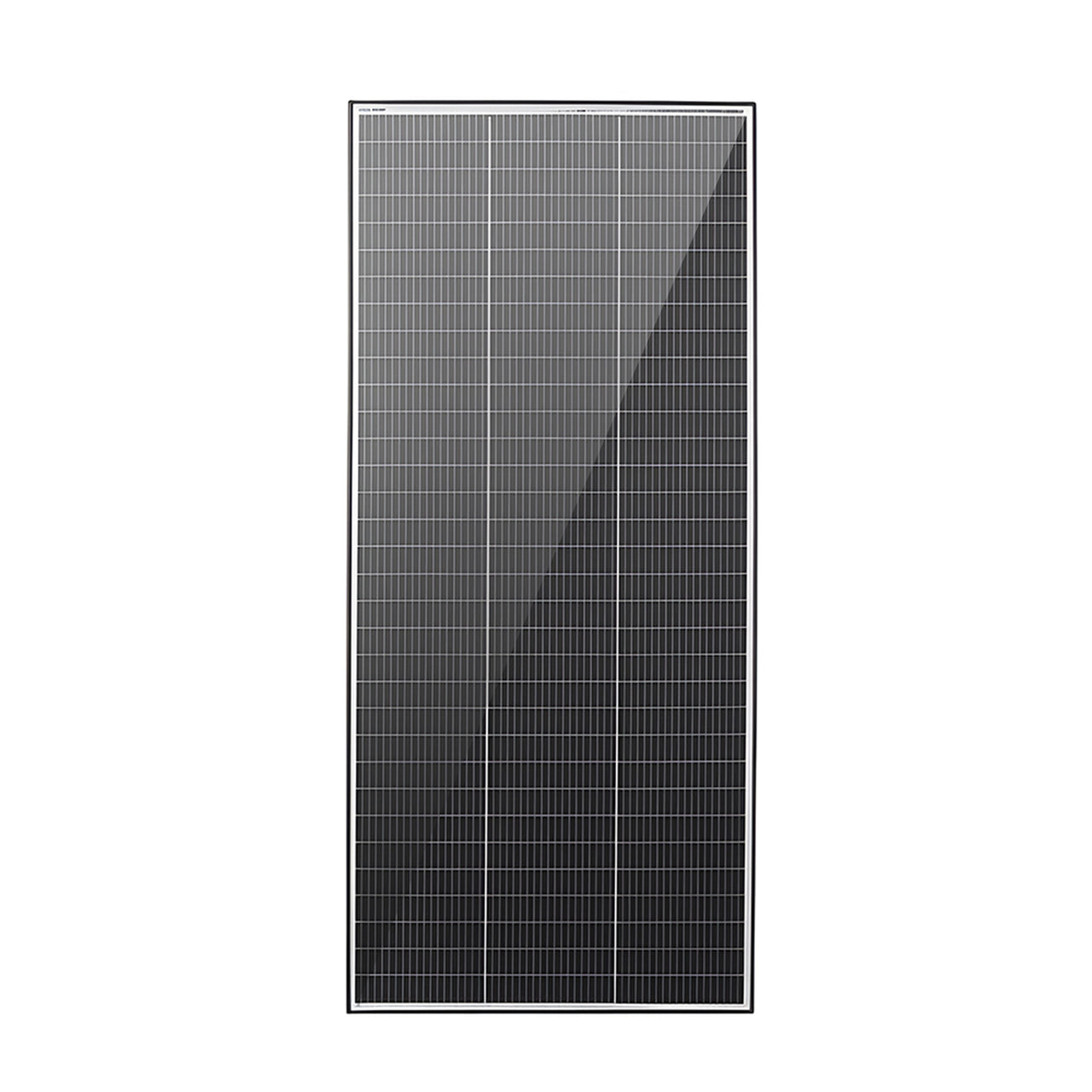

48V Solar Panels for High-Voltage Off-Grid Power
48V solar panels suit off-grid systems that run a 48V battery bank, a long cable run, or both. Higher panel voltage means lower current for the same wattage. Lower current reduces voltage drop, heat in cables and connectors, and the cable size needed between the array and the charge controller. This collection is built for trucks, buses, motorhomes, tiny homes, marine vessels and remote commercial or industrial sites where efficient energy transfer matters.
The range currently features the 220W Fusion Fixed Solar Panel (48V version). It is a rigid, framed glass panel designed for permanent roof, rack or ground-mount installations. If you are comparing panel construction styles, browse our full fixed, rigid and glass solar panels.
Why Choose a 48V Solar Panel?
A 48V panel gives a high-voltage system a better starting point than stringing many low-voltage panels together. It is a practical choice when the array sits several metres from the battery bank, or when the system powers large inverter loads.
- Lower current: This puts less thermal stress on cables, MC4 connectors, fuses and isolators.
- Reduced voltage drop: More of the harvested energy reaches the controller over long runs to sheds, trailers or ground frames.
- Efficient cabling: Smaller cable cross-sections can often be used for the same power. Always confirm this with a cable sizing calculation.
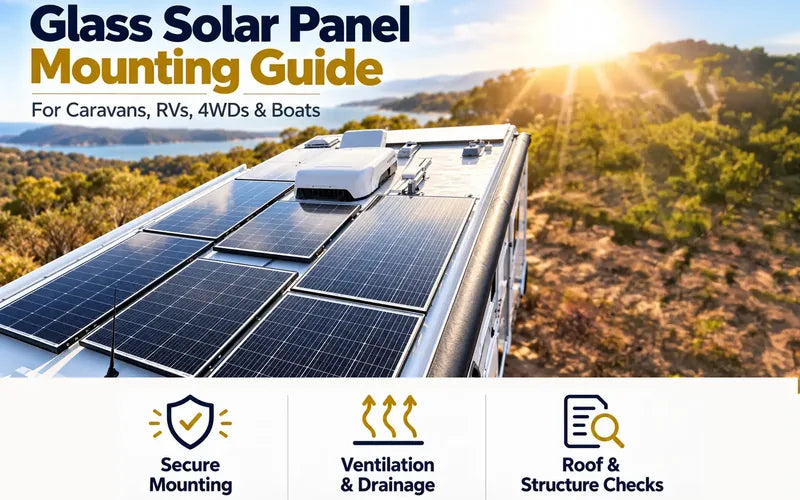
- Fixed-mount durability: The framed glass construction suits permanent installations exposed to Australian sun, wind and weather.
- Scalable arrays: You can add panels in series or parallel, as long as you stay within your MPPT controller's voltage and current limits.
Matching Panels to Your Charge Controller
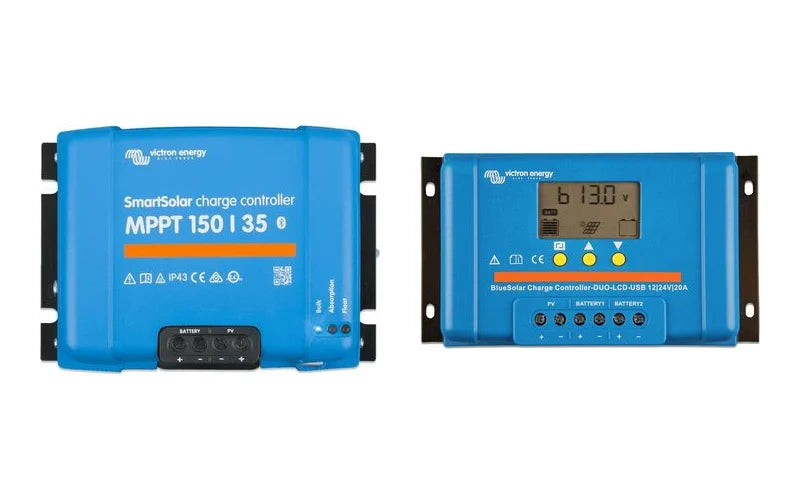
A 48V panel needs an MPPT solar charge controller rated for its open-circuit voltage (Voc). Allow headroom for cold mornings, when panel voltage rises. Check the panel's Voc and Vmp on the product page, then confirm that your series string stays below the controller's maximum PV input.
MPPT controllers can also step higher panel voltage down to charge 12V or 24V batteries. This lets you keep the benefits of a high-voltage array even with a lower-voltage battery bank. For help comparing controller types and ratings, see our guide to choosing the right solar charge controller. If your system runs at a lower nominal voltage, compare our 24V solar panels.
Frequently Asked Questions
Can I use a 48V solar panel to charge a 12V or 24V battery?
Yes. You need an MPPT charge controller that accepts the panel's input voltage and supports your battery voltage. A PWM controller is not suitable for this type of mismatch.
What is the advantage of 48V panels over 12V panels?
For the same power, a 48V panel draws roughly a quarter of the current of a 12V panel. This means lower cable losses and less heat. The benefit is greatest on long cable runs and larger arrays.
Is the 220W Fusion 48V panel suitable for vehicles and boats?
It suits permanent installations on trucks, buses, motorhomes and vessels with enough flat mounting space for a rigid framed panel. Use mounting hardware suited to your roof or deck, and seal all cable entries against moisture.
How many 48V panels can I connect in series?
That depends on your controller's maximum PV input voltage. Multiply the panel's Voc by the number of panels, add a margin for cold-weather voltage rise, and keep the total below the controller's rating.
Ready to build a more efficient high-voltage system? Choose the 220W Fusion Fixed Solar Panel (48V version) for lower current and reduced cable losses in your off-grid, marine or commercial installation. Order today to start harvesting more usable solar energy.