 Solar Panels
 Solar Controllers
 Batteries
 Inverters
 Mains Chargers
 DC-DC Chargers
 Cables/Accessories
 Power Converters
 Monitoring
 Kits
Kits
















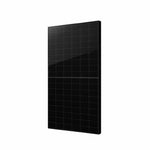
Seraphim Sable TOPCon Series 475W - Black Fixed Frame Solar Panel
Seraphim Sable TOPCon Series 475W - Black Fixed Frame Solar Panel
22.02% Efficient Bifacial N-Type TOPCon Panel - 1864x1134x30mm

 Highlights:Anodised Aluminium Frame: Durable 30mm black anodised aluminium alloy frame for structural integrity,TOPCon Solar Cells: 108 high-efficiency bifacial solar cells for maximum power generation,IP68 Junction Box: Weatherproof enclosure with 3 bypass diodes for enhanced safety,Output Cables: Pre-fitted 4mm2 cables for secure electrical connection,Bifacial Glass Design: Dual 2.0mm AR coated semi-tempered glass for durability and yield.
 Key features: Multi-busbar technology for improved current collection, Superior load capacity and high module efficiency, Excellent low-light performance, 30-year warranty with lower annual attenuation, Higher bifaciality for increased energy yield.


Regular price
$297.00
Availability:
Out of Stock
 View all products from Seraphim
Guaranteed Safe and Secure Checkout
0
DESCRIPTION
Seraphim Sable TOPCon Series 475W: High-Efficiency Bifacial Solar Panel for Residential and Commercial Installations
Advanced N-Type TOPCon Technology for Maximum Energy Yield
The Seraphim Sable TOPCon Series 475W solar panel leverages cutting-edge N-Type TOPCon cell technology to deliver superior performance and long-term reliability. With a module efficiency of 22.02%, this panel generates more power per square metre than conventional PERC modules, making it an excellent choice for space-constrained rooftops and ground-mount systems. The bifacial design captures light from both the front and rear sides, boosting total energy harvest—especially over reflective surfaces like light-coloured roofs or gravel.
Engineered for Australian conditions, the Sable Series excels in low-light environments, maintaining strong output during cloudy days, early mornings, and late afternoons. Its multi-busbar layout reduces resistive losses and minimises hot spot risks, ensuring consistent performance across the panel's lifespan.
Key Features
- 22.02% module efficiency for higher energy density in a compact footprint
- Bifacial N-Type TOPCon cells capture light from both sides, increasing total yield
- Excellent low-light performance for reliable output in overcast or shaded conditions
- Low annual degradation with a 30-year performance warranty guaranteeing at least 87.4% output
- IP68 junction box with 3 bypass diodes for enhanced weatherproofing and safety
- Robust 30 mm anodised aluminium frame rated for high wind and snow loads
Built to Withstand Harsh Environments
Durability is at the core of the Sable Series. The panel features dual 2.0 mm AR-coated semi-tempered glass with low iron content, maximising light transmission while resisting impact and environmental stress. The black anodised aluminium alloy frame provides structural integrity without excess weight, and the IP68-rated junction box ensures reliable electrical connections even in wet or dusty conditions. Certified to ISO9001, ISO14001, and ISO45001 standards, this panel meets rigorous quality and environmental management requirements.
Versatile Applications
Whether you're designing a residential rooftop system, a commercial solar farm, or an off-grid installation, the Seraphim Sable 475W adapts seamlessly. Its high voltage and current characteristics suit modern string inverter and power optimiser setups, while the bifacial capability adds value in ground-mount and carport applications. The panel's low temperature coefficient ensures stable performance even on hot Australian summer days, reducing energy losses when temperatures rise.
Long-Term Value and Sustainability
Investing in the Sable Series means lower balance of system (BOS) and levelised cost of energy (LCOE) over the system's lifetime. The extended 30-year performance warranty—with 97.4% output guaranteed in the first year—provides peace of mind and underscores Seraphim's confidence in their product. By choosing high-efficiency bifacial technology, you reduce the number of panels needed for your target output, saving on mounting hardware and installation labour.
Ready to Upgrade Your Solar System?
Order the Seraphim Sable TOPCon Series 475W today and harness advanced bifacial technology for your home or business. With proven durability, exceptional efficiency, and a warranty that spans decades, this panel is a smart choice for sustainable energy generation in Australia.
SKU: SRP-475-BTD-BG
SPECIFICATIONS
Specifications
Electrical Characteristics (STC) | |||||||
| Model | Power (W) | Dimensions (mm) | Weight (kg) | Vmp (V) | Imp (A) | Voc (V) | Isc (A) |
| SRP-475-BTD-BG | 475 | 1864 x 1134 x 30 | 27.0 | 33.10 | 14.35 | 39.55 | 15.16 |
Mechanical Characteristics | |
| External Dimension | 1864 x 1134 x 30 mm |
| Weight | 27.0 kg |
| Solar Cells | TOPCon 182 x 99.5 mm (108 pcs) |
| Front / Back Glass | 2.0 mm AR coating semi-tempered glass, low iron |
| Frame | Anodized aluminium alloy |
| Junction Box | IP68, 3 diodes |
| Output Cables | 4.0 mm², 250 mm(+) / 350 mm(-) or customised length |
| SKU: | SRP-475-BTD-BG |
| Model #: | SRP-475-BTD-BG |
| MPN: | SRP-475-BTD-BG |
| HS code: | 8541430010 |
| Country of origin: | CN |
| Package weight: | 27.0 kg |
| Package length: | 1.13 m |
| Package width: | 1.86 m |
| Package height: | 0.03 m |
WARRANTY
Seraphim Warranty Policy
1. Limited Product Warranty – Fifteen Years Seraphim Energy Group Co., Ltd (SERAPHIM) warrants that for a period of fifteen years commencing on the warranty start date, its photovoltaic solar PERC and TOPCon mono modules (MODULES),including factory-assembled DC connectors and cables, if any, to be free from defect in materials and workmanship under normal application, installation, usage and service conditions. This “Limited MODULES Warranty” does not warrant a specific power output, which shall be exclusively covered under clause 2 hereinafter (“Limited Peak Power Warranty”). The Limited MODULES Warranty period starts from the 180th day of the manufacturing date, or from the date of delivery, whichever is earlier.
2. 1 Limited Peak Power Warranty - Twenty-Five Years SERAPHIM provides a power output guarantee for its monofacial PERC modules for a total of 25 years from the start date of the warranty. The Limited Peak Power Warranty period from the 180 th day of the manufacturing date, or from the date of delivery, whichever is earlier. LINEAR PERFORMANCE WARRANTY For PERC Mono MODULES: less than 2.0% in the first year, thereafter less than 0.55% per year, ending with no less than 84.80% in the 25th year after the Warranty Start Date. The actual output power is calculated as follows: Actual Power Output (Year=1) ≥ Nominal Power * (1 - 2%) Actual Power Output(Year=N, 2≤N≤25)≥ Nominal Power *{1 –[2% + 0.55% *(N-1)]}
2.2 Limited Peak Power Warranty - Thirty Years SERAPHIM provides a power output guarantee for its monofacial TOPCon modules for a total of 30 years from the start date of the warranty. The Limited Peak Power Warranty period from the 180 th day of the manufacturing date, or from the date of delivery, whichever is earlier. LINEAR PERFORMANCE WARRANTY For TOPCon Mono MODULES: less than 1.0% in the first year, thereafter less than 0.4% per year, ending with no less than 87.4% in the 30th year after the Warranty Start Date. The actual output power is calculated as follows: Actual Power Output (Year=1) ≥ Nominal Power * (1 - 1%) Actual Power Output(Year=N, 2≤N≤30)≥ Nominal Power *{1 –[1% + 0.4% *(N-1)]}
3. Obtaining Warranty Performance
(a) Notification If the CUSTOMER has a justified claim covered by this “Limited Warranties for PV Modules”, an immediate notification directly to SERAPHIM shall be filed by mailing a registered letter in writing to the address of SERAPHIM listed hereunder, or, sending an email letter to the email account of SERAPHIM listed hereunder. Together with the notification, the CUSTOMER should enclose the evidence of the claim with the corresponding serial number of the MODULE(s) and the date on which the MODULE(s) have been purchased. The return of any MODULES will not be accepted unless prior written authorization has been given by SERAPHIM.
(b) Performance of Warranty
(1) Repair. If MODULES fail to conform to the “Limited Product Warranty” and the “Limited Peak Power Warranty”, SERAPHIM will, at its option, repair the MODULES. The CUSTOMER may, at it’s option, appoint a qualified third-party to repair with SERAPHIM’s written consent. The cost of such repair shall be borne by the SERAPHIM under this Warranty.
(2) Replace. If MODULES fail to conform to the “Limited Product Warranty” and the “Limited Peak Power Warranty” , SERAPHIM will, at its option, replace the MODULES. The new MODULES shall have the same specifications and output power or higher, or could satisfy the same need.
(3) Limited Refund. If the MODULES fail to comply with the “Limited Peak Power Warranty” , Seraphim will refund (at its option): (i) the fair market value at the time of claim, of the gap between actual output power and warranted output power; (ii) the remaining value of warranted output power of the remaining Warranty period. Remaining value=fair market value at the time of claim*warranted output power*remaining Warranty period/25years.
(4) Additional supply. If the MODULES fail to comply with the “Limited Peak Power Warranty”, Seraphim will additionally supply the CUSTOMER the free MODULES to make up the difference between the actual output power and the warranted output power of the defective MODULES.
4. Exclusions and Limitations
• In any event, all warranty claims must be received within the applicable warranty period for this warranty to be effective.
• The repair or replacement or refund remedy shall be the sole and exclusive remedy provided under this Warranty.
• The “Limited Product Warranty” and the “Limited Peak Power Warranty” do not apply to any MODULES which have been subjected to: Misuse, abuse, neglect or accident; Alteration, improper installation or application; Non-observance of SERAPHIM’s installation and maintenance instructions; Repair or modifications by someone other than an approved service technician of SERAPHIM; Power failure surges, lighting, flood, fire, accidental breakage or any other Force Majeure incidents.
• Warranty claims will not be honored if the serial number of the MODULES have been altered, removed or made illegible.
• Unless otherwise agreed by both SERAPHIM and CUSTOMER in the purchase/sales contract, the performance of the Warranty shall not extend the Warranty period of the MODULES again, that is, the Warranty period of the repaired, replaced or additional supplied MODULES shall be the remaining original Warranty period.
• Subject to authorization by Seraphim Customer Service Department, SERAPHIM will reimburse CUSTOMER for reasonable, normal, and documented shipping costs that comply with the Limited MODULES Warranty and the Limited Peak Power Warranty, Includes delivery of returned, repaired, replaced or free MODULES.However, any costs associated with MODULES’ installation, removal or reinstallation, as well as customs clearance costs and transit insurance shall not be included.
4A. Non-Fixed Applications
When the MODULES are used in non-fixed applications, including but not limited to recreational vehicles (RVs), caravans, campers, motorhomes, marine vessels, boats, trailers, mobile structures, or any other mobile or movable application, the Limited Product Warranty shall be reduced to five years from the Warranty Start Date. For the avoidance of doubt, this reduced warranty period applies regardless of the standard warranty period otherwise stated in this Warranty.
5. Limitation of Warranty Scope These “Limited Warranties for MODULES” as set forth herein are expressly in lieu of and exclude all other express or implied warranties, including but not limited to warranties of merchantability and of fitness for particular purpose, use (usage), or application, and all other obligations or liabilities on the part of SERAPHIM unless such other obligations or liabilities are expressly agreed to in writing signed and approved by SERAPHIM. SERAPHIM shall have no responsibility or liability whatsoever for damage or injury to persons or property, or for other loss or injury resulting from any cause whatsoever arising out of or related to the MODULES, including, without limitation, any defects in the MODULE, or from usage or installation. Under no circumstances shall SERAPHIM be liable for incidental, consequential or special damages, howsoever caused. Loss of usage, loss of profits, loss of production, and loss of revenues are specifically and without limitation excluded. SERAPHIM’s aggregate liability, if any, in damages or otherwise, shall not exceed the invoice value as paid by the CUSTOMER, for the single unit of MODULES. If the CUSTOMER has a justified claim covered by this “Limited Warranties for PV Modules”, an immediate notification directly to SERAPHIM shall be filed by mailing a registered letter in writing to the address of SERAPHIM listed hereunder, or, sending an email letter to the email account of SERAPHIM listed hereunder. Together with the notification, the CUSTOMER should enclose the evidence of the claim with the corresponding serial number of the MODULE(s) and the date on which the MODULE(s) have been purchased.
Severability If a part, provision or clause of this “Limited Warranty for MODULES”, or the application thereof to any person or circumstance, is held invalid, void or unenforceable, such holding shall not affect and shall leave all other parts, provisions, clauses or applications of this “Limited Warranty for MODULES”, and to this end such other parts, provisions, clauses or applications of this “Limited Warranty for MODULES” shall be treated as severable.
Disputes In case of any discrepancy in a warranty-claim, a first-class international test-institute such as Fraunhofer ISE, TÜV Rheinland, TÜV SÜD shall be involved to judge the defect(s) finally. All fees and expenses shall be borne by the responsible Party, unless otherwise determined Other dispute settlement clauses and applicable laws shall be subject to the sales/purchase contract signed by the SERAPHIM and CUSTOMER, but SERAPHIM reserves the right of final interpretation. You may have specific legal rights outside this Warranty, and you may also have other rights that vary from state to state. this limited warranty does not affect any additional rights you have under laws in your jurisdiction governing the sale of consumer goods, including, without limitation, national laws implementing EC directive 99/44. some states do not allow the exclusion or limitation of incidental or consequential damages, so the limitations or exclusions in this limited warranty statement may not apply to you.
Various The repair or replacement of the MODULES or the supply of additional MODULES, does not cause the beginning of new warranty terms, nor shall the original terms of this “Limited Warranty for PVModules” be extended. Any replaced MODULES shall become the property of SERAPHIM made for their disposal. SERAPHIM has the rights to deliver another type (different in size, color, shape or power) in case SERAPHIM discontinued producing the replaced MODULES at the time of the claim.
9. Warranty Transfer This warranty is transferable when the MODULES remains installed in its original location at the warranty registration.
10. Force Majeure SERAPHIM shall not be responsible or liable in any way to the customer or any third-party arising from any non-performance or delay in performance of any term and condition of sale,including this “Limited Warranty for PV Modules”,due to acts GOD,war,riots.strikes,warlike conditions,plague or other epidemics,fire,flood, or any other similar causes or circumstances beyond the reasonable control of SERAPHIM. In such cases, SERAPHIM’s performance of this Limited Warranty shall be suspended without liability for the period of delay reasonable attributable to such causes.
11. Validity This “Limited Power Warranty for PV Modules” will become null and void if the MODULE is transferred from the original continent of destination (e.g. North America). All customers, direct and indirect, are hereby notified of such potential nullification.
12. Contact Please contact SERAPHIM customer service department if you have any problem with the MODULES, quality or performance.
Address: Intersection of baimafeng road and Weimin Road, Jinzhai County, Lu'an City, Anhui Province
Tel: +86-0564-7736177
Mail: info@seraphim-energy.com customer.service@seraphim-energy.com
Remarks:
【1】STC: “Peak Power at STC” is the power in Watt peak that a PV- module generates in its Maximum Power Point. “STC” are as follows: (1) light spectrum of AM 1.5, (2) an irradiation of 1000 W per m2 (3) a cell temperature of 25 degree centigrade at right angle irradiation. The measurements are carried out in accordance with IEC 61215 as tested at the connectors or junction box terminals – as applicable – per calibration and testing standards of SERAPHIM valid at the date of manufacture of the PV-modules.
【2】This warranty is applicable to the series of PV module as below: SRP-XXX-6MA,SRP-XXX-6MA-HV,SRP-XXX-6MB,SRP-XXX-6MB-HV; SRP-XXX-BMA,SRP-XXX-BMA-HV,SRP-XXX-BMB,SRP-XXX-BMB-HV; SRP-XXX-BMC,SRP-XXX-BMC-HV,SRP-XXX-BMD,SRP-XXX-BMD-HV; SRP-XXX-BMZ,SRP-XXX-BMZ-HV,SRP-XXX-BTA-HV,SRP-XXX-BTB-HV; SRP-XXX-BTC-HV,SRP-XXX-BTD-HV,SRP-XXX-BTZ-HV,SRP-XXX-BTE-HV; SRP-XXX-BTF-HV.
DOCUMENTS
Loading product documents…
WIRING INSTALLATION
SOLAR 4 RVS
OFF-GRID, EXTRA LOW VOLTAGE SOLAR PANEL WIRING GUIDE
Please read this document in full before commencing installation.
To maximise the efficiency and longevity of your new solar panels, please ensure you follow the instructions in this guide carefully. Failure to do so WILL result in shortened panel lifespan AND void your warranty.
While it seems simple to connect solar panels to your battery, common installations practices such as using non-waterproof connectors as permanent connection points CAN damage the solar panel AND void your warranty, please continue reading the guide for more details.
Whilst due care has been taken to ensure the recommended wiring practices will provide a safe and efficient installation, we cannot guarantee these methods will be suitable in every scenario due to variations in cable, connectors, solar charge controllers, environment, and installation practices. It is the duty of the installer to verify the installation is installed to local standards and refer to each manufacturer’s instructions.
This guide is limited to 12 and 24V battery systems.
Contents
Selecting an Appropriate Solar Panel based on the Specifications
Series, Parallel and Combination Wiring Installations
Installation Type 1 – Parallel Wiring
Installation Type 2 – Series Wiring
Installation Type 3 – Series/Parallel Combination Wiring
Paralleling and Series of Different Solar Panels
Bypass, Blocking Diodes and Shading
Sizing a Solar Charge Controller
Safety
- All work should be carried out in shade or inside out of direct sunlight. Use a towel or blanket on top of the panel to reduce light exposure;
-
 Work safely at heights. Ensure you have a sturdy, secure ladder;
- Use insulated tools;
- Ensure the panels are kept covered during installation;
- Wear appropriate footwear;
-
 Use gloves and other PPE where appropriate;
- Seek help where needed.
- This guide is only relevant for installations installed at below 120V DC using the Open Circuit Voltage (Voc) rating of the solar panel.
Example: Model Exo-SP-F4-200, the Voc is 24.1V, therefore 5 panels in series is 120.5V and would require a licensed electrician to complete an installation.
- Extra low voltage solar arrays CAN cause fires AND/OR injury/death if adequate precautions are not taken.
- Do not leave the solar panel short-circuited (i.e. the MC4 connectors should NOT be connected together) and exposed to the sun, this can cause failure of the bypass diodes, hot-spots and permanent damage to the solar panel within minutes.
Selecting an Appropriate Solar Panel based on the Specifications
 The wattage of the solar panel is calculated by Max Power Voltage (Vmp) x Max Power Current (Imp), i.e. 10.2A x 19.8V = 202W.
When no power is being drawn from the solar panel, the Voc will be present.
To charge a 12V battery bank, dependent on the charge controller, approximately 7V is required between the absorption voltage requirement of the battery and the solar panel Voc. I.e. a calcium 12V battery that requires 14.8V absorption voltage, will need a panel with at least 21.8Voc. Most solar panels are approx. 23Voc. When calculating the array current, use the short circuit current (Isc).
The diagram to the right shows a simple photovoltaic (PV) / solar array connected to a 12V battery.
Never install a solar panel in a permanently shaded location, this can damage the bypass diode and cause hot spots.
If a solar isolation switch is used, it should be sized to handle the full short circuit current of the array, plus ~20% to avoid nuisance tripping. I.e. if an array is rated to 30Asc, then the circuit breaker should be at least 36A, the closest match will be a 40A circuit breaker.
Series, Parallel and Combination Wiring Installations
When more than one solar panel is used, each solar panel can be connected to an individual solar charge controller, this will generally lead to the best performance but at the highest cost and complexity.
An alternative is to wire the panels in either series or parallel or a combination of both.
 Installation Type 1 – Parallel Wiring
This type of installation, most common for off-grid 12V systems, each solar panel positive is connected together, and each negative connected together. In this case, the array voltage will remain the same as a single solar panel, however the array current will increase.

If a solar panel were to fail by an internal fault, such as an internal bypass diode short circuit, the fault current of the array would all flow through the failed diode. There are many examples of this causing fires, string fusing has been designed to minimise the risk.
In the example (above) of three solar panels, if the left panel were to fail from a shorted bypass diode, the middle and right solar panels would each pass 10A into the left solar panel. Therefore, 20A would pass through the 15A fuse, and cause it to disconnect the failed solar panel from the array.
The fuses should be located close to 3 to 1 branch connector.
Fusing is not required when two or fewer solar panel are used because it is not possible for the fuse to reach the required tripping current.
Parallel arrays provide good tolerance to shade and keeps the voltage low, and thus safer.
Installation Type 2 – Series Wiring
 In this type of installation, commonly used in 24V systems, one solar panel positive is connected to the next solar panel negative. In this case, the array current will remain the same as a single solar panel, however the array voltage will increase. Typically, 24V systems require an open circuit array voltage of at least 36.6V.
Each group of panels wired in series is called a “string”.
The advantages of series wiring are:
- Reduced wiring cost
- Reduced power losses in cables
- Typically improved performance in MPPT solar charge controllers
The disadvantages are:
- Poor shade tolerance
- High voltage rated solar controllers often required
- Less safe
Installation Type 3 – Series/Parallel Combination Wiring
This type of installation, commonly used in larger systems, two or more solar panels are connected in series to make a string, and two or more strings are paralleled together. In this case, the array current AND the array voltage will increase.
A note on MC4 solar connectors, these types of connectors are waterproof, affordable, high voltage rated, are pre-installed on most solar panels and are usually disconnectable. The current rating is typically limited to approx. 30A when 6mm2 or larger PV1-F solar cable is used, therefore they would not be suitable for four 10A solar panels wired in parallel without overloading the connector. Series/parallel wiring arrangements are a good way to overcome this while still being able to use these types of connectors

The advantages of this type of system wiring are:
- Partially reduced wiring cost
- Partially reduced power losses in cables
- Typically improved performance in MPPT solar charge controllers
- Avoids the need of string fuses when less than two strings are paralleled
- Reasonable shade tolerance
The disadvantages are:
- High voltage rated solar controllers often required
Paralleling and Series of Different Solar Panels
Panels can typically be wired in parallel when the same type of solar cell and voltage is used. I.e. two solar panels using P-type mono-PERC cells and both 24Voc can be paralleled, but if a P-type mono-PERC cell and n-type IBC cell are paralleled, differing coefficients of performance will cause a mismatch in voltages, causing the higher voltage panel to be “dragged down” to the lower voltage panel and increasing the risk of panel failure. Consult your distributor for verification before paralleling different types of solar panels.
At the time of writing, the Exotronic PERC series of solar panels are all designed to use the exact same cell cut into 36 pieces and therefore the voltage and performance will be nearly identical, and will thus provide good performance when paralleled.
Panels can only be wired in series when the cell type and current are the same, this is quite rare. Therefore typically only the same solar panel make and model can be wired in series.
Example: 2x 200W Exotronic Solar fixed solar panels can be wired in series, and 2x 30W Exotronic fixed solar panels can be wired in series, and each string can be wired in parallel. But the 30W and 200W panel cannot be wired in series.
Cable Size
The most practical wire for solar panels is PV1-F solar cable, this cable is most common in 4mm2 and 6mm2. A very rough rule of thumb is for arrays of less than 20A can use 4mm2, and 20A or larger should use 6mm2. If a larger size is required, it is recommended to run two runs from the array to the solar controller. There is no harm in using larger size cable except for practicality and cost considerations.
PV1-F cable is highly UV resistant, durable, high voltage rated, designed to fit MC4 connectors, highly stranded, and tinned copper. It’s properties mean the cable is well suited for most applications including marine, and it is also cost effective.
Solar Array Performance
Solar panels are rated at Standard Test Conditions (STC), this means solar panels are placed on a bed of light rated at 1000W/m2 at 25C and at sea level. This is why it is not typical to see the solar panel output in typical conditions, combined with the other losses (dirt on panel, cable/connection losses, sun orientation, panel temperature, solar controller losses, battery efficiency losses) the actual output that will be seen will likely be much lower.
Often a rule of thumb is you will see up to 75% of the STC rating of the solar panel at midday in summer. I.e. 150W from a 200W solar panel.
In some rare cases you may see close to full output, i.e. the solar panel has been stored in a cool garage, and suddenly exposed to full midday summer sun. As the panel heats up, performance will drop to the more typical 75% output.
For the best performance, the solar panel should be perpendicular to the sun, however normally brackets to make the solar panel face the sun provide minimal performance improvement at a much higher complexity and cost.
Bypass, Blocking Diodes and Shading
 Each solar panel will have one or more bypass diodes. Despite the marketing claims, the main purpose of bypass diodes is to protect the cells from overheating. When a cell is shaded it causes the cell to increase resistance, as current flows through the resistance, the cell heats up, and if the current is not bypassed around the cell, it will cause a hot spot and subsequent failure of the cell, and as each cell is wired in series, failure of the whole solar panel.
In 12V arrays, the bypass diodes, while necessary for the purpose of protection of the cells, provide minimal performance improvement.

When a solar panel is completely shaded, it can become a resistance, causing the power flow of other solar panels to flow through it in reverse thus causing power loss in the system.
Blocking diodes can be installed to prevent this. However, this event is rare, and the diodes will cause power loss at all times. Therefore, unless specifically required by the manufacturer, blocking diodes should be avoided. Most good quality solar controllers should have their own blocking diode installed, and therefore an additional blocking diode is not necessary for single panel installations. They are also not a replacement for string fusing.
Sizing a Solar Charge Controller
The solar charge controller or solar regulator must be sized appropriately for the array. A too small charge controller can be damaged, and too large can be unnecessary.
If using a PWM controller, typically you must use a larger controller than required. You must also use a 30-36 cell (17 to 20Vmp) solar panel on a 12V battery or 60-72 cell (34 to 40Vmp) solar panel on a 24V battery. To size a PWM controller, a simple calculation is: Power of Array in Watts / Battery Bank Voltage x 0.8 for losses, i.e. 400W / 12V x 0.8 = 26.7A controller required.
If using an MPPT controller, you can often size the controller smaller to reduce costs, while still allowing maximum performance in winter. When using an MPPT, ideally use a 36 cell or more (19Vmp+ limited by the maximum input voltage rating of the PV input of the solar controller) solar panel on a 12V battery. To size an MPPT controller, a simple calculation is: Power of Array in Watts / Battery Bank Voltage x 0.8 for losses, i.e. 400W / 12V x 0.8 = 26.7A controller required. However you can often downsize to a 20 or 25A controller as it is often only in summer when the most power is available, that the controller will reach the maximum output, and therefore oversizing is not necessary.
MPPTs will have significantly improved performance when it is required the most, i.e. during the cooler months where there is more likely to be shading, and low light conditions.
Solar Panel Efficiency
 Solar cell efficiency is effectively how much light is converted to power in terms of m2 of the solar cell.
Solar panel efficiency is the same measurement, but takes into account the entire panel, i.e. the space between the cells and the frame. Therefore solar panel panels can be more efficient simply by decreasing the space between the cells, and to the frame. This is why larger solar panels are more efficient then smaller panels; less borders/gaps to cell ratio.
Practically speaking, when useable area is limited, a 22% efficient 300W solar panel could take up most of the available space, limiting the room for future panels and increasing the complexity of wiring, whereas it could be possible to install 2x 200W modules plus a 160W solar panel on a single controller, greatly increasing the total power of the array and keeping the wiring relatively simple. There are many different solar technologies, the most common is monocrystalline. While the highest cost, it is higher in efficiency compared to polycrystalline and amorphous, and therefore reduces the quantity of solar panels needed and simplifies the system. Amorphous, while having improved shade tolerance, is very low efficiency, therefore even when compared to a shaded monocrystalline module, the overall output can often be worse.
Cells get exponentially more expensive as the efficiency increases, the easiest way for unscrupulous retailers to increase profits is to overstate the rated output of the solar panel. In the example below, the solar panel is 18V and advertised to be 350W, therefore it should have an Imp of approximately 19.4A. The cells, based on the specifications and appearance are ¾ cut 156mm cells with 5 wire busbars. The highest output possible on cells of this nature is approximately 7.5A. Therefore it is not physically possible for this solar panel to exist. A true output of a panel this size will be approximately 120 to 130W based on several reasonable assumptions. As Sunpower uses interdigitated back contact cells, there are no busbars on the front, so the cells type stated below is also incorrect.

The highest cost and most efficient solar cells commercially available at the time of writing are approximately 24% efficient, and therefore the maximum efficiency for a very large module could approach 23% efficient.
Maintenance
To ensure your solar panels are performing optimally, be sure to keep on top of this simple maintenance checklist.
- Clean on a regular basis with neutral soap & clean water, using a soft sponge or cloth;
- If in a marine environment, wash regularly with fresh water to avoid damage caused by saltwater;
- Periodically inspect the mechanical and electrical connections;
- Denatured alcohol (methylated spirit) can be used to remove grease etc.
Ongoing Support
Solar 4 RVs are proud to offer a support service beyond the purchase of your solar panels. If you require further technical support, please feel free to contact us. We are happy to help!